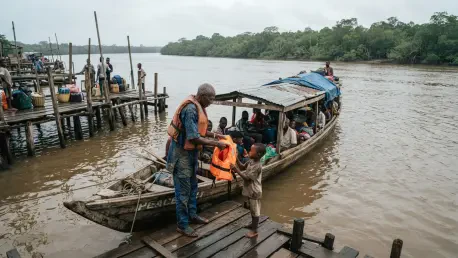

The House of Representatives has mandated an investigation into the lack of certification for boat pilots and the failure of vessel inspections at local jetties in Bayelsa. This legislative directive follows a harrowing maritime disaster that occurred on November 20, 2026, when a crowded vessel capsized in the Southern Ijaw Federal Constituency. The accident claimed twenty-nine lives and left many more individuals missing in the murky waters of the Niger Delta. As the community of Ayama mourns its lost children, the federal government faces mounting pressure to address the systemic neglect that characterizes inland water transportation. Representative Rodney Ambaiowei, who moved the motion, emphasized that the tragedy resulted from a long-standing failure in regulatory oversight. This incident has now become a catalyst for a broader national conversation regarding how the safety of millions who live in riverine areas is guaranteed and maintained across the country.
Analyzing the Roots of Maritime Disasters
Impact of Geographic Isolation
The absolute reliance of riverine communities on water transportation creates a unique and dangerous socioeconomic dynamic where safety often takes a back seat to basic mobility. In many parts of the Southern Ijaw region, the intricate network of creeks and rivers serves as the only viable transit route for commerce, education, and social activities, leaving residents with no alternative but to use available vessels. This geographic reality has birthed a captive market where boat operators hold significant power over the traveling public. Because there are no roads connecting these remote settlements to major urban centers like Yenagoa, passengers are frequently forced to board overcrowded and poorly maintained boats to fulfill essential social obligations, such as the condolence visit that preceded this recent tragedy. Lawmakers have observed that this lack of choice emboldens operators to ignore basic safety protocols, knowing that their services are indispensable for the survival of the local population.
Technical Failures and Equipment Deficits
Beyond the lack of alternatives, the structural integrity of the vessels currently in operation across the Niger Delta remains a primary concern for maritime safety experts. A significant portion of the local fleet consists of antiquated dugout boats or wooden craft that have been overworked and are fundamentally unseaworthy for modern transport needs. These vessels are prone to capsizing, especially at turbulent river junctions where currents are strongest and navigation requires precision. The legislative inquiry has highlighted that many of these boats lack essential safety equipment, including functional life jackets and emergency floaters. When accidents occur, the absence of flotation devices often transforms manageable situations into mass casualty events. Furthermore, the practice of overloading to maximize profit remains a chronic issue, as operators seek to capitalize on the limited number of functional vessels. Without a rigorous inspection regime to retire these dangerous craft, the risk of recurring disasters will continue.
Bridging the Policy Gap
Comparative Analysis of Transit Funding
A critical point of contention within the House of Representatives involves the perceived imbalance in federal transportation spending and policy implementation. House Minority Leader Fred Agbedi pointed out that while the government has aggressively pursued modern transportation solutions for road users, such as the Compressed Natural Gas bus initiative, the maritime sector has been largely ignored. This disparity suggests a hierarchy of concern where urban commuters and those in landlocked regions receive state-of-the-art safety and subsidy programs, while those in the creeks are left to navigate primitive and perilous conditions. Lawmakers argue that the citizens of riverine communities contribute significantly to the national economy through the oil and gas sector, yet they do not see a corresponding return in the form of safe transit infrastructure. The current policy framework appears to treat water transportation as an informal mode of travel, failing to provide the same level of regulatory rigor and financial support that is standard for highways.
Economic Incentives for Fleet Modernization
To address these inequities, the proposed reforms emphasize the need for direct government intervention in the procurement and distribution of modern maritime assets. High-quality, safe river craft are currently priced beyond the reach of local commercial operators, which perpetuates the cycle of using cheaper, dangerous wooden boats. Legislators are advocating for a federal subsidy program designed to help local transport unions transition to modern fiberglass or steel-hulled vessels equipped with standard safety features. By providing access to affordable and regulated boats, the government can effectively modernize the sector and reduce the economic pressure on operators to overload their craft. This approach would move Nigeria toward a more inclusive transportation policy, ensuring that the benefits of national development reach the most remote corners of the Niger Delta. The goal is to establish a public transport system on water that mirrors the safety and efficiency of modern bus rapid transit systems, providing a secure means of travel for every citizen.
Establishing Accountability and Standards
Addressing Jurisdictional Ambiguity
The complex legal environment governing Nigeria’s inland waterways often results in a responsibility gap that hinders effective safety enforcement. Under the current constitutional arrangement, many smaller creeks and river channels fall under the Concurrent Legislative List, meaning both federal and state governments share the authority to regulate and manage these areas. Deputy Majority Whip Isiaka Ibrahim noted that this shared jurisdiction frequently leads to a situation where neither tier of government takes full accountability for vessel inspections or pilot licensing. This administrative ambiguity is often exploited by operators who establish unauthorized loading points in remote areas to avoid whatever minimal oversight exists at official jetties. Without a clear and unified regulatory framework, safety standards remain fragmented and inconsistent across different regions. The House has called for a more coordinated approach that clearly defines the roles of the National Inland Waterways Authority and state-level maritime boards to ensure safety.
Benchmarking Against Corporate Safety Protocols
In seeking a way forward, lawmakers have suggested looking toward the high safety standards maintained by multinational oil corporations operating within the same geographical space. These companies utilize advanced safety protocols, mandatory training for all personnel, and state-of-the-art life-saving equipment that stands in stark contrast to the abysmal conditions found in local commercial transport. House Leader Prof. Julius Ihonvbere argued that the standards of these corporations should serve as a benchmark for national maritime regulations. Furthermore, there is a push to dismantle the cultural reliance on a passenger’s “swimming experience” as a substitute for safety gear. Even expert swimmers can succumb to the shock of a sudden capsize or the powerful currents of the Niger Delta, making the universal use of life jackets an absolute necessity. Collective responsibility among community associations, local government councils, and maritime organizations is essential to ensure that safety rules are enforced at the grassroots level today.
Implementing Long-Term Reforms
Emergency Response and Detailed Inquiries
The legislative response to the Bayelsa tragedy is built upon three strategic pillars: immediate humanitarian relief, rigorous independent investigation, and long-term systemic overhaul. The House of Representatives has called upon the National Emergency Management Agency and the Niger Delta Development Commission to provide comprehensive support for the families of the victims. This assistance is intended to cover medical expenses for survivors and provide a safety net for those who lost their primary breadwinners or essential fishing equipment in the accident. Simultaneously, the Committee on Emergency and Disaster Management has been tasked with working alongside the Bayelsa State Government to conduct a thorough probe into the disaster. This investigation is expected to look beyond the immediate cause of the capsizing to examine the deeper failures in the certification process for boat pilots. By identifying the specific lapses that allowed an uncertified operator to navigate an unsafe vessel, the committee aims to provide a factual basis for the policy changes.
Enforcement Mechanisms for Safety Standards
Moving toward a safer maritime future requires the immediate implementation of several high-impact resolutions aimed at forcing a paradigm shift in waterway management. The House mandated that the National Inland Waterways Authority strictly enforce the compulsory use of life jackets at all boarding points and introduce heavy penalties for operators who use unseaworthy vessels or illegal loading zones. Officials established that the transition from dugout boats to modern, subsidized maritime assets was a non-negotiable step toward ensuring passenger safety. Additionally, the legislature moved to standardize the training and certification of all commercial boat pilots, ensuring that professional competence became a mandatory requirement for operating on public waters. These steps provided a clear roadmap for transforming the nation’s inland waterways into a regulated and secure transport network. By prioritizing the lives of riverine citizens through these concrete actions, the government demonstrated a commitment to ensuring that safety is guaranteed.