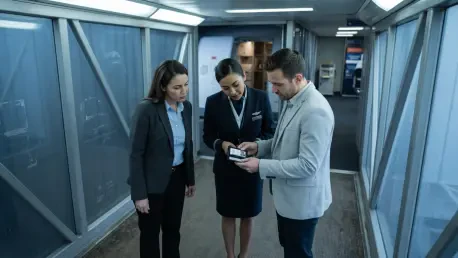

The sudden appearance of masked, plainclothes individuals on a narrow jet bridge creates an immediate atmosphere of crisis that can compromise the tactical focus of airline crews during critical phases of flight preparation. Industry representatives from the Association of Flight Attendants have formally raised alarms regarding the increasing frequency of these unannounced Immigration and Customs Enforcement operations within sterile airport environments. The primary concern rests on the operational methods employed by federal agents who frequently bypass traditional identification standards by failing to display visible badges or judicial warrants while maneuvering through high-security transit zones. This lack of transparency forces cabin crews into a defensive posture, as they are trained to view any unidentified person near the aircraft as a potential security breach. Standard operating procedures that govern terminal safety are being strained by the very agencies tasked with maintaining national security protocols across the aviation network.
Impersonation Risks and Security Vulnerabilities
Central to the argument against current enforcement tactics is the catastrophic potential for bad actors to exploit the confusion generated by unidentified agents. If flight attendants and pilots cannot instantaneously distinguish between an authorized federal officer and an individual attempting to disrupt a flight, the entire integrity of the aviation security perimeter collapses. Recent incidents, such as the confrontation at Seattle-Tacoma International Airport, have shown how these maneuvers can traumatize crew members and passengers during the boarding process.
When federal agents operate without clear visual markers of their authority, they inadvertently create a template for criminals to bypass security checkpoints. The resulting uncertainty forces airline staff to make split-second decisions about whether to permit entry, a dilemma that should never exist within a modern, regulated airport environment. Labor leaders emphasized that the current approach is fundamentally out of control, as it prioritizes immigration enforcement over the core principles of air safety and situational awareness within the terminal.
Legal Authority and Procedural Conflict
The escalating friction between federal enforcement and airline management reveals a complex legal landscape regarding jurisdiction and the rights of private carriers. While federal agencies possess broad powers within the United States, airline labor groups assert that the jet bridge remains a specific zone where airline policy and judicial oversight should hold weight. Specifically, the union argues that airlines have a legitimate right to deny access to federal agents unless a formal judicial warrant is presented to the flight crew or gate agents.
This stance is rooted in the necessity of protecting the privacy and safety of passengers who have already cleared standard security screenings. By pushing back against the presumption of unfettered access, airline crews are attempting to re-establish a boundary that ensures law enforcement actions do not override the safety protocols established by the Federal Aviation Administration. Consequently, flight attendants are being encouraged to withhold passenger data in the absence of a direct legal mandate, fostering a new culture of procedural resistance.
Implementation of Standardized Enforcement Protocols
Industry leaders and regulatory bodies eventually recognized that the lack of a standardized protocol was becoming an unsustainable liability for the commercial aviation sector. To address this, many airlines began coordinating with trade groups to develop clear internal guidelines that shielded employees from being forced into legal gray areas during federal interventions. These steps included instructing staff to withhold passenger information unless explicitly required by a mandate, thereby shifting the burden of data collection back to federal resources like the TSA.
Ultimately, the implementation of a mandatory pre-notification system for non-emergency airport operations significantly reduced the risk of on-site chaos. Establishing a transparent liaison between federal agencies and airline security offices ensured that enforcement actions occurred without compromising the safety of the cabin environment. Such collaborative frameworks became the new industry standard, prioritizing the safety of the flight over aggressive enforcement. These actions successfully preserved the integrity of the transit experience while respecting legal boundaries.