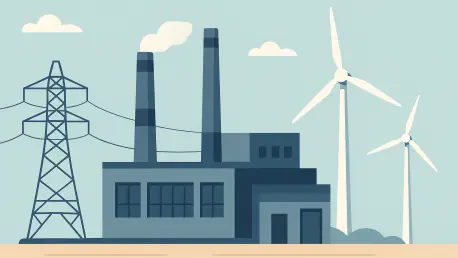

The invisible threads of our global civilization now converge in massive, humming halls where silicon and cooling systems transform raw electricity into the very fabric of our digital existence. These structures, often tucked away in nondescript industrial parks, serve as the physical foundation for every aspect of the modern information age. From the complex algorithms driving global financial markets to the simple act of sending a digital greeting, the data center is the silent engine of the 2026 economy. As our reliance on cloud computing and instantaneous data retrieval deepens, these facilities have transitioned from niche technical assets into critical infrastructure comparable to power plants or transport hubs.
The perception of this industry has undergone a radical transformation over the past few years. Initially, data centers were viewed as heralds of economic modernization, and local governments frequently competed to attract them with generous tax incentives and promises of high-tech prestige. However, as their physical footprint has expanded and their demand for resources has spiked, this warm reception has cooled significantly. In many jurisdictions, the narrative has shifted from one of welcome partnership to one of intense public and political scrutiny, with critics questioning whether the benefits of hosting such giants outweigh the strain they place on local environments and utilities.
Modern operations are dominated by hyperscalers and massive colocation providers that manage facilities on a scale previously unimaginable. These entities do not merely host data; they maintain the vast computational resources required to sustain a society that never sleeps. The resource footprint involved is staggering, requiring gigawatts of power and millions of gallons of water for thermal management. This immense scale has turned data centers into a focal point for debates over land use, environmental sustainability, and the fundamental role of the state in managing private enterprise within a liberal framework.
Navigating the Tides of Technological and Market Evolution
Drivers of Demand and the Influence of Artificial Intelligence
The current surge in infrastructure requirements is largely propelled by the explosion of generative artificial intelligence and advanced machine learning models. Unlike traditional data processing, which occurred in predictable cycles, AI workloads require continuous, high-density computing power that generates significant heat. This shift has forced a fundamental redesign of data facilities, moving away from standard air cooling toward sophisticated liquid-cooling technologies that can handle the thermal output of the newest specialized chips. The transition to AI-centric architecture means that a facility built today must be far more resilient and energy-intensive than one constructed even a few years ago.
Beyond the specialized world of AI, general consumer behavior continues to push capacity needs to new heights. The “always-on” economy, characterized by high-definition streaming, pervasive remote work, and the total digital transformation of retail and logistics, ensures that the baseline demand for data remains on a steady upward trajectory. From 2026 to 2028, the volume of data generated globally is expected to grow at an accelerating rate, necessitating a constant expansion of storage and processing hubs. This persistent demand creates a permanent pressure on the grid, making the data center industry one of the largest and most consistent consumers of industrial energy.
Innovation within the sector is increasingly focused on mitigating this environmental footprint through hardware optimization and architectural ingenuity. Market-driven incentives have led to the development of more efficient cooling systems and the integration of power-saving hardware that reduces idle energy waste. Many operators are now exploring onsite energy generation and advanced battery storage to decouple their peak demand from the public grid. These advancements are not merely philanthropic gestures; they are essential survival strategies in a market where energy costs represent the single largest operational expenditure.
Market Projections and the Future Economic Landscape
Global forecasts suggest that the data center market will continue its robust expansion, with significant capacity additions planned across both established and emerging tech hubs. Statistical outlooks indicate that the sector’s share of total electricity consumption will rise significantly between 2026 and 2030, reflecting the deepening integration of digital services into every vertical of the global economy. This growth is not limited to traditional locations like Northern Virginia or Dublin; it is spreading toward new regions where land and energy are more readily available, creating a truly global web of interconnected nodes.
The capital expenditure cycle associated with this growth is unprecedented in its scale and commitment. Tech giants are earmarking hundreds of billions of dollars for infrastructure, signaling a long-term belief in the central role of data processing as a primary economic driver. These investments provide strong economic signals, suggesting that the digital economy is not a bubble but a permanent structural shift. For policymakers, this massive influx of capital presents a dilemmhow to capture the economic benefits of such investments while managing the localized pressures they create on infrastructure and community resources.
Addressing the Friction: Regulatory and Resource Challenges
The most pressing challenge facing the industry is the immense burden of resource consumption, specifically regarding electricity and water. In several high-density regions, the sudden arrival of multiple massive data centers has strained local utility stability, leading to concerns about potential blackouts or price hikes for residential consumers. Managing this demand requires a delicate balance between supporting technological progress and ensuring that basic services remain reliable and affordable for the broader population. Without a clear strategy for utility expansion, the friction between data centers and local communities will only intensify.
Externalities and community impact have moved to the forefront of the regulatory debate. Localized issues such as low-frequency noise from cooling fans, the aesthetic impact of massive windowless buildings, and the heavy use of industrial land have fueled a “Not In My Backyard” sentiment. While these facilities bring tax revenue, they often provide fewer direct jobs per square foot than traditional manufacturing, leading some residents to view them as intrusive neighbors that offer little in return. Addressing these concerns requires a shift toward more transparent planning processes and stricter standards for noise and environmental mitigation.
There is also a growing risk of economic illiberalism as governments move toward selective moratoriums and arbitrary industry-specific bans. When a state singles out data centers for restrictive regulations while allowing other high-energy industries to operate without similar hurdles, it disrupts the market function and undermines the principle of equal treatment under the law. These blunt instruments often fail to solve the underlying resource issues and instead drive investment to other jurisdictions. Such a fragmented regulatory landscape creates uncertainty, making it difficult for operators to plan long-term investments and for utilities to forecast future needs accurately.
The Framework of Governance: Laws, Standards, and Neutrality
Upholding the principle of regulatory neutrality is essential for maintaining a fair and functional liberal state. Instead of targeting data centers specifically, governments should apply uniform standards to all high-energy and high-water industries. If a facility exceeds noise limits or places an undue burden on the grid, it should be regulated based on those specific harms rather than its identity as a data hub. This approach ensures that the law remains predictable and that the state does not engage in the counterproductive practice of picking winners or losers based on political popularity.
The concept of cost-causation is central to a market-based governance framework. Liberal states must ensure that data center operators bear the full financial burden of the utility upgrades and infrastructure expansions necessitated by their operations. By moving the cost of new substations, transmission lines, and water treatment facilities from residential taxpayers to the entities driving the demand, the market can more accurately price the true cost of digital expansion. This prevents hidden subsidies and ensures that data centers only locate in areas where the infrastructure can truly support them without harming the public good.
A rigorous critique of rent-seeking and selective subsidies is also necessary to preserve the liberal order. For years, state-level tax incentives were used to lure data centers, creating a culture where companies competed for government favors rather than purely on their operational merits. These subsidies often distorted the market and led to an inefficient allocation of resources. Eliminating these firm-specific benefits is as important as avoiding arbitrary bans. A neutral state should focus on providing a stable, low-burden regulatory environment for all businesses rather than offering specialized deals to a favored few.
The Horizon of Data Infrastructure and Global Competition
The intersection of national security and the AI arms race has added a geopolitical dimension to the data center debate. Maintaining domestic data supremacy is increasingly seen as a necessity in the face of competition with global rivals. Because the physical location of data processing affects latency, security, and jurisdiction, having a robust and expanded internal network of data centers is vital for national defense and economic sovereignty. Policymakers must therefore weigh local zoning concerns against the broader strategic need to remain at the forefront of the technological frontier.
Market-driven innovation often serves as the most effective solution to resource scarcity. As the cost of electricity and water rises, the incentive for data centers to develop new energy sources and conservation techniques increases. We are already seeing the industry catalyze the development of next-generation energy solutions, such as small modular reactors and advanced thermal recycling. By allowing the market to function, the state encourages these technological breakthroughs, which can eventually benefit other sectors of the economy and contribute to a more sustainable industrial landscape.
The debate over the future of data infrastructure must move away from blunt land-use tools and toward more nuanced frameworks that address global ethics and AI safety. Attempting to solve complex questions about the direction of artificial intelligence through local zoning boards is an ineffective and misplaced strategy. Instead, these high-level concerns should be handled through international cooperation and federal standards that focus on the behavior and output of the technology, while local governance remains focused on the tangible physical impacts of the buildings themselves.
Balancing Progress and Governance in a Liberal State
The analysis indicated that a liberal defense of the data center industry rested on the pillars of neutrality, market pricing, and the rule of law. It was found that administrative fiat and selective bans were less effective than general regulations that addressed specific harms across all industries. The evidence suggested that when the state maintained a neutral stance, it fostered an environment where innovation could flourish without placing an unfair burden on the public or the environment. This approach preserved the integrity of the market while ensuring that the physical growth of the digital age remained sustainable and accountable.
Policymakers were encouraged to move toward a system that mitigated specific externalities like noise and pollution through uniform standards. The recommendation emerged that infrastructure funding should follow a strict cost-causation model, ensuring that the heavy users of the grid paid for its expansion. It was also concluded that the era of selective tax subsidies should have ended to prevent the erosion of the liberal order through cronyism. By focusing on these objective measures, the state was able to protect the interests of its citizens without stifling the technological advancements that drove the modern economy.
The final outlook for the industry remained positive, provided that a stable and predictable regulatory environment was maintained. Data centers proved to be capable of thriving when they were treated as standard industrial participants rather than political targets or favored clients. As the world moved further into the AI era, the collaboration between private innovators and a neutral state became the essential template for progress. By honoring both civic responsibility and market dynamism, the liberal state ensured that the backbone of the digital world remained strong, efficient, and integrated into the broader social fabric.