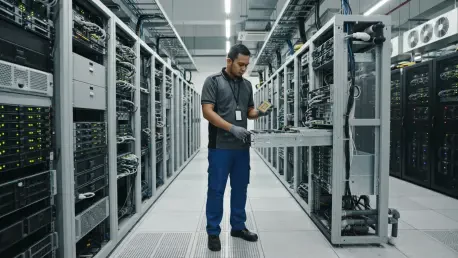

Global commerce in high-performance computing has reached a definitive turning point as the United States implements rigorous new oversight mechanisms targeting several of the world’s most critical emerging technology corridors. The Department of Commerce, through the Bureau of Industry and Security, recently formalized a shift in trade policy that fundamentally alters the acquisition landscape for advanced artificial intelligence semiconductors. This regulatory expansion specifically encompasses Malaysia, Singapore, Indonesia, Thailand, and Brazil, moving these nations into a heightened tier of export scrutiny. The objective is to secure the technological frontier by ensuring that restricted jurisdictions do not utilize these regions as conduits for prohibited hardware or as remote processing hubs.
Global Semiconductor Landscape and Strategic Industry Significance
The high-performance AI chip market remains the most contested segment of the global technology sector, serving as the literal engine for modern economic and military advancement. Specialized hardware, primarily high-end graphics processing units and specialized AI accelerators, has become a strategic asset that nations are increasingly eager to control. As of 2026, the demand for these components has surpassed traditional consumer electronics, driven by the race to build massive computational clusters capable of sustaining the next generation of neural networks. The Bureau of Industry and Security now plays a central role in this ecosystem, acting as a gatekeeper for the flow of silicon that defines sovereign power.
Malaysia, Singapore, Indonesia, Thailand, and Brazil have emerged as vital nodes in this global network, attracting billions in capital for data center infrastructure. Their strategic importance stems from a combination of geographical placement, favorable energy policies, and growing expertise in semiconductor assembly and testing. However, this rapid expansion has also made them attractive targets for technology diversion. The rise of international data hubs in these regions means that computational power can be exported digitally even when the physical hardware is restricted elsewhere. By targeting these five specific nations, the United States is acknowledging their pivotal role as the new intermediaries of the digital age.
Emerging Trends and Market Growth Projections
The shift in the global landscape reflects a broader transition from the simple sale of physical components to the provision of massive, remote computational power. This evolution has complicated the traditional understanding of export controls, as a chip located in Southeast Asia can be accessed and utilized by an entity located thousands of miles away in a restricted jurisdiction. Consequently, data centers have transformed into geopolitical intermediaries that must now balance local economic growth with the stringent security demands of international trade partners.
Evolving Patterns in AI Infrastructure and Usage
Market dynamics are shifting away from localized server installations toward massive, centralized training facilities that offer computing capacity as a service. This trend has created a cloud loophole where restricted entities might rent the performance of advanced chips without ever taking physical possession of them. The current demand for large-scale general-purpose AI training requires thousands of interconnected processors working in tandem, making these data centers high-value targets for regulatory oversight. As a result, the focus of trade policy has moved from the point of sale to the point of utilization, requiring a more granular understanding of who is accessing the hardware.
Many emerging economies are simultaneously launching sovereign AI initiatives to reduce their dependence on foreign software ecosystems. These projects aim to build domestic training capabilities that can cater to local languages and cultural nuances, but they require the very same high-end hardware that is now under restricted access. This tension between national technological ambitions and international compliance standards is defining the current era of technology development. Countries like Brazil and Indonesia are finding that their path to digital autonomy is increasingly dictated by their ability to navigate the complex licensing requirements of the United States.
Performance Metrics and Future Market Indicators
Data center capacity across Southeast Asia is projected to grow at an unprecedented rate from 2026 through 2029, with significant investments from global technology giants. This growth is measured not just in physical square footage, but in aggregate processing speed and interconnect bandwidth, which are the primary metrics for AI performance. The implementation of the 12 million Total Processing Performance threshold serves as a clear benchmark for what the United States considers a sensitive level of computing power. Facilities that exceed this benchmark are now subject to a different set of rules, regardless of their primary business model or intended customer base.
The influence of regional investments on the global supply chain is also being reshaped by these performance-based restrictions. Investors are now forced to calculate the potential impact of procurement delays and the possibility of denied licenses when planning new facilities. While the underlying demand for AI services continues to rise, the technical specifications of the hardware being deployed are being carefully calibrated to remain within acceptable regulatory bounds. This creates a stratified market where the most advanced “frontier” chips are reserved for highly vetted environments, while a secondary market for lower-performance alternatives continues to thrive in less regulated zones.
Overcoming Regulatory Obstacles and Operational Complexities
Operating within this new environment requires a sophisticated approach to administrative management that many organizations are still working to develop. The burden of new licensing requirements is not merely a legal hurdle but an operational one, as it affects everything from procurement timelines to maintenance schedules. Companies must now account for the time required for case-by-case reviews by the Bureau of Industry and Security, which can introduce significant uncertainty into long-term infrastructure projects. Managing these delays without losing competitive momentum has become a core competency for data center operators in the affected regions.
One of the most complex challenges involves mitigating the risk of front companies and indirect control. Restricted entities have become increasingly adept at using third-party intermediaries to obscure their involvement in hardware procurement or cloud rental agreements. To counter this, operators must employ advanced due diligence strategies that look deep into corporate ownership structures and end-user workloads. Balancing the desire to attract foreign investment with the need to maintain strict compliance is a delicate act, particularly when local economic ambitions are at stake.
The New Regulatory Framework and Compliance Standards
The implementation of the Interim Final Rule introduces a rigorous set of standards that distinguish between different types of organizations based on their headquarters and ownership. U.S.-based multinational corporations operating in the five targeted nations often benefit from specific exemptions, provided they maintain strict internal controls and adhere to monthly reporting protocols. These exempted organizations are required to provide detailed logs of their hardware assets, their processing capabilities, and the nature of the tasks being performed. This level of transparency is designed to ensure that American technology remains under the effective control of entities that align with U.S. security interests.
For local entities and non-U.S. multinationals, the requirements are significantly more stringent and lack the same level of automated exemptions. These organizations must navigate the full licensing process for each acquisition of covered semiconductors, which includes a comprehensive review of their customer base and security protocols. In jurisdictions like Malaysia, the enforcement of the Strategic Trade Act provides a local legal framework that complements these international rules. Organizations are now mandated to implement Know Your Customer protocols that mirror the rigor of the financial services sector, ensuring that every teraflop of computing power is accounted for and its final destination is verified.
Future Outlook for Global AI Trade and Innovation
The emergence of a silicon curtain is beginning to redefine the geography of global innovation, forcing a realignment of geopolitical interests. As the United States continues to tighten its grip on high-end computing, the viability of neutral technology hubs is being put to the test. Nations that once sought to remain independent of major power rivalries are now finding that they must choose which technology ecosystem they wish to inhabit. This alignment is not just about chips; it extends to the software, standards, and security protocols that underpin the modern digital economy.
In response to these restrictions, there is a growing emphasis on innovation within non-restricted semiconductor architectures and localized manufacturing techniques. While U.S.-designed chips currently dominate the high-performance AI market, the pressure of export controls is accelerating the development of alternatives that fall outside of Country Group D:5 restrictions. This diversification of the global supply chain could lead to a more fragmented technological landscape where different regions operate on incompatible hardware and software stacks. Over the next few years, the integration of global security chains into daily business operations will become a permanent feature of the tech industry, rather than a temporary disruption.
Summary of Findings and Strategic Recommendations
The transition into this high-oversight era demonstrated that data center operators and technology investors needed to prioritize regulatory agility over raw expansion. The core findings indicated that the United States successfully shifted the focus of export controls from the physical movement of goods to the digital provision of services. This change necessitated a fundamental restructuring of how infrastructure projects were financed and managed, with a new emphasis on the verifiability of end-users. Investors who anticipated these shifts early in 2026 managed to maintain their growth trajectories by proactively adopting the most stringent transparency standards available.
Final assessments of the market prospects for Malaysia and Brazil suggested that while the licensing burden was substantial, it did not eliminate their attractiveness as global data hubs. Instead, it favored well-capitalized operators who could afford the administrative costs of compliance. The successful integration of Strategic Trade Act protocols within local jurisdictions helped build trust with international regulators, ensuring a steady, if more controlled, flow of high-performance hardware. Those who thrived in this landscape were the ones who viewed compliance not as a barrier, but as a prerequisite for participating in the global AI economy. Moving forward, the industry learned that the price of access to the world’s most powerful chips was a commitment to total transparency in their operation and utility.