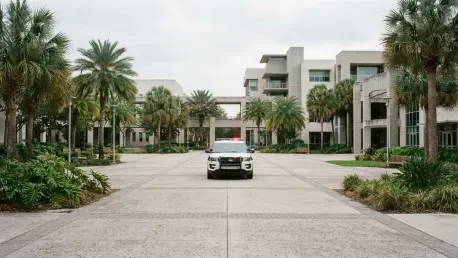

Florida’s status as a national outlier in campus policing became clear when it became the only state to extend federal immigration authority to university police forces. This unprecedented shift has fundamentally altered the operational landscape of public higher education across the Sunshine State. As of 2026, the integration of federal immigration enforcement into campus security infrastructure is no longer a theoretical debate but a practical reality for thousands of students. The implementation of these policies, primarily through the federal 287(g) program, has sparked intense discussions regarding the balance between public safety and the preservation of civil liberties. Academic environments, traditionally seen as spaces for open inquiry, now navigate a complex legal terrain where campus police officers hold dual roles as local law enforcement and federal immigration agents. This evolution in policing strategy reflects broader political trends while raising significant questions about the impact on student life and institutional trust.
Policy Framework and State Directives
The 287(g) Framework: Expanding Police Power
The technical core of Florida’s approach is the Task Force Model within the 287(g) program, which allows designated campus officers to perform specific immigration tasks. Under these formal agreements, university police departments receive specialized training from ICE, granting them the authority to interrogate individuals regarding their citizenship status and execute administrative warrants for immigration violations. By mid-2025, thirteen major institutions, including the University of Florida and Florida State University, successfully integrated these powers into their daily operations. While university administrations often argue that these tools are intended for collaborative law enforcement rather than proactive raids, the scope of authority is fundamentally broader than traditional campus security. Officers can now make arrests for immigration-related issues without a judicial warrant, provided they meet federal legal standards. This shift has changed the nature of student-police interactions across these major public campuses.
The adoption of these agreements was not a localized decision by university police chiefs but was largely driven by state-level executive pressure. In early 2025, the governor’s office issued a directive that encouraged all state agencies, including university police departments, to maximize their cooperation with federal immigration authorities. Although state law did not explicitly mandate that higher education institutions enter into 287(g) agreements, the political environment created a strong incentive for compliance. This has made Florida a distinct outlier in the national landscape of higher education, as no other state has extended such specific federal enforcement authority to its university-based police forces. Critics suggest that this alignment with state political goals undermines the independence of academic institutions. Meanwhile, supporters argue that the policy enhances regional security and ensures that all levels of government work in tandem to enforce federal law consistently within the state’s borders.
Campus Resistance: Protests and Judicial Rulings
The implementation of ICE-authorized policing has encountered substantial resistance from student organizations and faculty members who fear a chilling effect on academic freedom. Tensions culminated at Florida International University when a student group known as ICEBreakers organized a silent protest during an official campus appearance by state leadership. After several students were disciplined for wearing protest apparel inside university buildings, the ACLU of Florida filed a federal lawsuit in late 2026. This legal challenge centered on the First Amendment rights of students to voice opposition to campus policies without fear of administrative retribution. In a significant preliminary ruling, a federal judge issued an injunction that prevented the university from enforcing strict bans on indoor expressive activities. The court emphasized that while universities maintain the right to manage their property, they cannot use administrative policies to suppress student speech or dissent regarding controversial immigration enforcement partnerships.
Beyond the immediate legal battles over free speech, the presence of federal authority on campus has raised concerns about the psychological impact on the student body. Faculty members at several institutions reported a decline in participation from immigrant students in campus life and public forums, fearing that any interaction with authorities could lead to status inquiries. This climate of apprehension prompted university departments to reassess their privacy policies and the way they handle student data. The debate has moved from the legality of the 287(g) agreements themselves to the broader question of how a university can maintain an inclusive environment while serving as a conduit for federal immigration enforcement. The ongoing litigation serves as a critical test case for the limits of institutional authority in regulating student conduct that is protected by the Constitution. As the court case progresses, it continues to highlight the friction between state-mandated security measures and the traditional protections afforded to campus communities.
Constitutional Protections: Strategic Advocacy for Students
To address these evolving legal challenges, civil rights organizations developed comprehensive toolkits to help students navigate the new policing environment effectively. These resources emphasized the importance of knowing constitutional protections, such as the right to remain silent when questioned about citizenship status by campus officers. Because Florida law required individuals to provide identification during a lawful investigatory stop, students learned to distinguish between providing identity and disclosing immigration history. Advocacy groups also coordinated efforts to secure private legal counsel for those facing immigration proceedings, as the government did not provide free representation in these civil matters. Students and faculty successfully established campus-wide monitoring networks to document police interactions, ensuring a level of transparency that was previously lacking in the initial stages of the ICE partnership. This proactive approach transformed the campus from a site of passive compliance into a community of legally literate advocates prepared to defend their rights.
Strategic efforts in the academic year also focused on formalizing university-wide workshops that provided students with practical advice on documentation requirements and encounter protocols. These sessions clarified that federal law required noncitizens over age 18 to carry specific immigration documents, a rule that many were previously unaware of in a campus setting. By fostering a culture of mutual aid and legal preparedness, student organizations effectively mitigated some of the anxiety caused by the 287(g) agreements. The movement pushed for more transparent communication from university administrations regarding the specific triggers for immigration status inquiries, which helped in reducing rumors and misinformation. Over time, these initiatives proved that while state policies could change the tools available to law enforcement, the collective action of the student body remained a powerful counterweight. The lessons learned during this period of transition provided a blueprint for other states facing similar legislative pressures, highlighting the resilience of the academic community when faced with structural changes in policing.