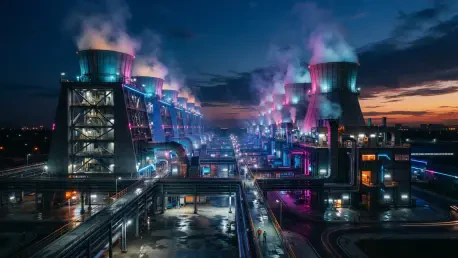

The Digital Backbone Under Scrutiny: California’s Data Center Landscape
While the global economy remains tethered to the invisible threads of the digital cloud, the physical structures that power this connectivity have become the newest battleground for community autonomy and environmental preservation across the Golden State. California currently serves as home to 366 data centers, positioning it as a top-tier hub for the infrastructure that supports everything from global logistics to personal social media feeds. Yet, these massive facilities are no longer being welcomed with open arms by the municipalities that once viewed them as symbols of modern economic prowess. Instead, they are being closely scrutinized for their massive consumption of land, water, and power, shifting the industry from a quiet utility to a central figure in intense local policy debates.
The rapid evolution of this digital infrastructure has forced a re-evaluation of how much industrial weight a single region can bear. Traditionally, data centers were treated as low-impact tenants because they generated minimal traffic and noise compared to manufacturing plants. However, the sheer density of these developments has reached a tipping point where their presence is felt in the local utility bills and the rising temperatures of urban corridors. As these facilities move from the periphery of public consciousness to the center of city planning agendas, the conflict between technological growth and the quality of life for residents has become unavoidable, turning once-routine zoning meetings into heated public forums.
Navigating the AI Boom and Shifting Market Projections
The Rise of Generative AI and the Industrialization of the Cloud
The insatiable appetite for artificial intelligence is fundamentally redesigning the data center industry by requiring hardware that handles intense computational loads. This has transitioned the market away from standard server rooms toward hyperscale facilities that function more like heavy industrial power plants than traditional office parks. As corporate reliance on real-time data processing becomes a baseline requirement for economic survival, developers are prioritizing proximity to high-voltage energy grids over central business districts. This shift is turning quiet suburbs into essential nodes for global AI processing, often without the full consent or understanding of the residents living nearby.
This industrialization process has changed the physical profile of the cloud, making it larger, hotter, and more demanding than ever before. Hyperscale developers are now looking for massive plots of land that can accommodate cooling systems and backup power arrays necessary to keep AI models running without interruption. This trend has created a new set of market drivers that emphasize energy reliability above all else, often placing data centers in direct competition with residential neighborhoods for the limited capacity of the existing power grid. As a result, the very technology intended to streamline modern life is creating physical bottlenecks in the infrastructure of the communities it serves.
Growth Forecasts and the Economic Weight of Hyperscale Infrastructure
Market data indicates that infrastructure spending in this sector will continue to rise from 2026 through the end of the decade as the race for computational supremacy intensifies. While California remains a critical geographic node, the forward-looking perspective reveals a growing bottleneck where technological innovation is outstripping the capacity of local power grids. Forecasts suggest that the competition for regional resources will become a defining economic challenge, potentially forcing a choice between maintaining reliable utility service for residents and fueling the next generation of digital infrastructure. The sheer economic weight of these multi-billion-dollar projects makes them difficult for cash-strapped cities to ignore, yet the long-term fiscal benefits are being questioned.
Industry performance indicators show that while the demand for AI-driven capacity is surging, the “growth at any cost” model is hitting physical and regulatory limits. Investment patterns from 2026 to 2030 are expected to focus heavily on regions that can provide guaranteed access to renewable energy, as carbon-neutral mandates become stricter across the state. This creates a high-stakes environment where developers must prove their value to the community before breaking ground. The fiscal impact of these facilities is also being reconsidered, as the high initial investment often comes with tax breaks that may not compensate for the increased strain on local emergency services and public utilities.
Confronting the Barriers of Resource Scarcity and Local Opposition
The most significant obstacles to expansion are the physical limits of the environment and the rising tide of organized local resistance. These facilities are often described as energy-hungry, requiring vast amounts of electricity to run processors and millions of gallons of water to cool them. In many regions, this strain on public utilities has triggered a grassroots revolt, uniting diverse political groups who believe the environmental costs—including noise pollution and increased air emissions from backup generators—far outweigh the corporate tax benefits. Since June 2026, dozens of local resolutions have been introduced to curb the growth of these facilities, signaling a major shift in public sentiment.
To overcome these hurdles, some industry players are exploring the AI Community Compact, a framework designed to offer local guarantees such as ratepayer protections and earlier project transparency. However, the disconnect between corporate promises and community anxiety remains a significant hurdle to any meaningful expansion. Local advocates argue that the noise from massive cooling fans and the risk of water shortages during drought years are tangible threats that cannot be mitigated by generic corporate social responsibility programs. This tension has transformed data center development from a technical challenge into a complex social and political negotiation that requires a new level of community engagement.
The Regulatory Tug-of-War Between State Mandates and Local Autonomy
A regulatory disconnect has formed between Sacramento’s preference for managed growth and city-level demands for immediate control. Although state leadership has recently implemented laws aimed at increasing environmental disclosure and protecting the power grid, local officials argue that these broad mandates do not provide enough power to individual communities. This has created a transparency gap where residents are informed about the negative impacts of a project but lack the legal tools to stop or modify it. Consequently, cities such as Oakland and Santa Clara have pivoted toward more aggressive measures, including building moratoriums and outright bans, to preserve their local autonomy against industrial encroachment.
This struggle for control highlights a fundamental question about whether infrastructure of state-wide importance should be governed by local or regional authorities. While Governor Gavin Newsom has signed several laws intended to streamline the approval process for green-tech projects, data centers often fall into a regulatory gray area. Municipalities like Alhambra are asserting their right to prioritize the immediate needs of their residents over the long-term data collection goals of the state. This fragmented regulatory landscape creates uncertainty for developers, who now face a patchwork of local rules that can change with each city council election, further complicating the timeline for critical infrastructure projects.
Future Outlook: Innovation, Disruption, and the Race for Infrastructure
The evolution of the industry will likely be defined by a rapid pivot toward more sustainable engineering solutions to appease municipal regulators. Technologies such as advanced liquid cooling and onsite renewable energy microgrids are moving from the experimental phase to standard requirements as developers try to decouple their growth from the public utility grid. However, the precedent set by other regions, like the pause on hyperscale centers in New York, suggests that California’s resistance could lead to a geographic shift in the industry. If the state cannot find a way to balance industrial needs with community standards, investment may flow toward neighboring regions that offer more permissive environments.
Market disruptors are also forcing a rethink of how data centers are designed and integrated into the urban landscape. Smaller, decentralized edge data centers might offer a way to provide processing power without the massive footprint of a hyperscale facility, potentially reducing local opposition. Moreover, the integration of data centers with local district heating systems, where waste heat from servers is used to warm nearby buildings, could turn a perceived liability into a community asset. The success of the industry will depend on its ability to move beyond piecemeal concessions and demonstrate a commitment to being a restorative, rather than an extractive, part of the California landscape.
Balancing Technological Dominance with Community Sustainability
The confrontation over infrastructure development proved that the path toward digital dominance required a complete overhaul of how industry leaders engaged with local stakeholders. Success in the sector depended on moving away from top-down state mandates toward collaborative regional resource planning that treated water and power as shared, finite assets. Policy experts recommended that future projects integrate directly into the community fabric through heat-recycling programs or dedicated investments in local energy infrastructure rather than operating as isolated industrial islands. The shift from state-level disclosure to local-level bans served as a clear indicator that the future of the tech economy would be decided not just in boardrooms, but in city council chambers across the state. Leaders recognized that for California to sustain its role as a global innovator, it had to prioritize community-driven ecological standards as much as it did raw processing power. Consequently, the transition to a sustainable digital economy was facilitated by the industry’s ability to provide concrete benefits to the municipalities that hosted their server arrays.