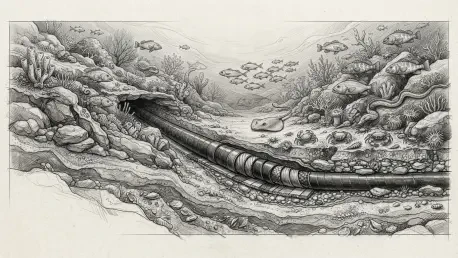

New regulations for the Oregon coast aim to mitigate the environmental impacts of infrastructure while accommodating global data transfers and energy transmission. Oregon is currently at a critical regulatory crossroads as it prepares to overhaul the management of its territorial sea, which extends three nautical miles from the shoreline. The Department of State Lands has introduced the first major update to seafloor infrastructure rules in nearly twenty-five years, reflecting the need to modernize standards for a digital and energy-focused age. This administrative shift aims to align state law with modern technological advancements, such as fiber-optic cables and renewable energy transmission, while addressing the growing environmental and fiscal challenges facing the Oregon coast. The scope of these changes impacts a wide range of stakeholders, from international telecommunications firms to local commercial fishing fleets that depend on a healthy marine ecosystem today.
Strengthening Oversight and Environmental Accountability
Modern Standards: Infrastructure and Decommissioning
The proposed regulations introduce a formalized application process that demands detailed assessments of marine resources and existing ocean uses within any project area. Developers must now provide exhaustive data on potential environmental impacts and establish rigorous emergency response protocols to protect the seafloor from accidents. This level of oversight ensures that any entity wishing to utilize state-owned submerged lands undergoes a vetting process as sophisticated as the technology being deployed. These requirements are specifically designed to anticipate the unique challenges posed by modern undersea infrastructure, which often involves deep burial or complex anchoring systems. By mandating these high-resolution surveys and contingency plans from the outset, the state effectively shifts the burden of environmental proof onto the developers. This proactive stance is intended to safeguard sensitive habitats from the initial stages of construction through the long-term operation of the project.
A significant addition to the framework is the mandatory decommissioning plan, which ensures that when cables or pipelines reach the end of their operational life, they are removed rather than abandoned. This requirement prevents old equipment from becoming permanent environmental hazards or obstacles for other seafloor users, such as crabbers and trawlers. In the past, the absence of clear retirement protocols often left the public responsible for the long-term legacy of industrial waste on the seafloor. Now, the new rules require a comprehensive strategy for infrastructure withdrawal to be submitted during the initial permitting phase. This ensures that the costs and logistics of removal are factored into the project’s total lifecycle from day one. By enforcing these mandates, Oregon is setting a precedent for responsible marine stewardship, ensuring that the seabed remains a renewable and accessible resource for future generations who rely on these vital coastal waters for their livelihoods.
Fiscal Restructuring: Fees and Restoration
In line with recent legislative mandates, the Department of State Lands is revising how it calculates compensation for the private use of public submerged lands. The new formula determines easement fees based on the diameter of the infrastructure, ensuring a more equitable and predictable cost structure for developers while reflecting the physical footprint of the project. This shift away from older, less precise valuation methods represents a move toward a more market-aligned approach to managing public assets. By linking the cost directly to the size of the conduit or cable, the state creates a logical financial scale that can accommodate everything from small-scale scientific sensors to massive telecommunications trunks. This restructuring is a response to the rapid diversification of seafloor technology, where a static fee model is no longer functional. The goal is to ensure the state receives fair market value for the exclusive use of public space, which can then be reinvested.
Furthermore, a five percent surcharge will be introduced to support the waterway enhancement grant program, a move that aligns industrial growth with environmental preservation. This financial model ensures that the industrial use of the seafloor provides a direct benefit to the public through the funding of vital restoration activities within Oregon’s territorial sea. These funds are slated for projects such as habitat restoration, the removal of invasive species, and the improvement of public access to marine resources. By tying development to restoration, the state creates a self-sustaining cycle where the modernization of digital and energy infrastructure helps mitigate its own ecological footprint. This approach addresses long-standing concerns from environmental advocates who have argued that the private exploitation of the seafloor has historically lacked a direct mechanism for repair. The surcharge system transforms the state’s role from a mere landlord to an active facilitator of coastal health.
Navigating Jurisdictional Complexity and Economic Interests
Strategic Alignment: Agency Coordination
Oregon is moving toward a model of integrated ocean management where seafloor decisions are harmonized with the broader Territorial Sea Plan. This approach recognizes that the marine environment is influenced by various stressors, including climate change and shifting oxygen levels, which must be considered during the permitting process. In 2026, the state is increasingly viewing the seafloor not as an isolated industrial zone but as a dynamic component of a larger ecological system. This integration ensures that infrastructure projects do not inadvertently exacerbate existing environmental challenges, such as ocean acidification or habitat fragmentation. By aligning specific project approvals with the comprehensive goals of the Territorial Sea Plan, regulators can better assess the cumulative impacts of multiple developments. This systemic view allows for more strategic planning, where the placement of new cables can be optimized to avoid particularly sensitive biological zones.
To streamline the complex approvals required across federal, state, and local jurisdictions, the new rules emphasize joint agency reviews and pre-application meetings. These collaborative efforts are designed to identify potential conflicts early, reducing the risk of litigation and minimizing disruption to the marine environment. Under the previous system, developers often faced a fragmented permitting process that led to significant delays and unpredictable outcomes. By formalizing a coordination mechanism, Oregon is making the regulatory landscape more navigable for both private industry and public watchdogs. This process brings together representatives from the Bureau of Ocean Energy Management, state environmental agencies, and local coastal governments to review proposals in a unified manner. Such coordination is particularly crucial for projects that span from the deep ocean floor across the public beach and into inland areas, ensuring all layers of government work together.
Local Impacts: Fishing and Coastal Economies
For residents in Southern Oregon, particularly in Coos and Curry counties, these regulations are vital for protecting the local economy and traditional maritime livelihoods. The commercial fishing industry relies on unobstructed access to healthy marine habitats, and the new rules explicitly direct state agencies to minimize conflicts between infrastructure and fishing activities. In regions where the economy is deeply intertwined with the ocean’s harvest, the placement of a single undersea cable can have significant ripple effects on the community’s financial stability. The updated rules require developers to engage directly with fishing stakeholders during the planning phase to ensure that proposed routes do not intersect with prime fishing grounds or essential nursery habitats. This emphasis on local consultation acknowledges that the seafloor is not just a site for global data transfer, but also a workspace for thousands of Oregonians who depend on the ocean for their income.
By shifting away from a first-come, first-served mentality, Oregon is establishing a stewardship-first model that treats the seafloor as a shared public resource. This ensures that technological progress does not come at the expense of ecological integrity or economic stability in the long run. The state has recognized that the unregulated expansion of seafloor infrastructure could lead to a crowded and chaotic underwater landscape. To prevent this, the new rules encourage the use of existing utility corridors and the reuse of retired conduits wherever possible. This consolidation strategy reduces the overall footprint of industrial activity on the seabed, leaving more space for biological processes and traditional ocean uses. Furthermore, the commitment to transparency in the permitting process allows for greater public participation, giving coastal residents a voice in how their offshore resources are utilized, fostering a maturing perspective on sustainable marine resource management.
Advancing the Future of Coastal Stewardship
The Department of State Lands concluded that a fundamental shift in seafloor governance was necessary to meet the demands of the modern era. By the end of the public comment period, stakeholders across the spectrum provided insights that shaped a more robust and responsive regulatory framework. The resulting rules established clear expectations for transparency, financial accountability, and environmental protection that did not exist in previous decades. Moving forward, the implementation of these standards should prioritize the continuous monitoring of infrastructure impacts to ensure that the territorial sea remains resilient. State officials suggested that periodic reviews of the fee structures and decommissioning protocols would be essential as undersea technology continues to evolve beyond 2026. Agencies were encouraged to maintain the spirit of collaboration found in the joint review process to resolve future conflicts between renewable energy needs and conservation goals. This proactive management strategy was designed to ensure the seafloor remained a vital public asset for all.