

The landscape of national cybersecurity has reached a defining moment as the public and private sectors converge on a unified standard for threat transparency. Navigating the transition from proposed guidelines to enforceable federal law requires organizations to align their internal governance

Law firms and corporate legal departments have historically faced a significant financial bottleneck when attempting to utilize cutting-edge artificial intelligence for massive document review cycles. By focusing on a limited set of high-speed sorting tasks, the GPT-6-Luna model provides a

The contrast between Hong Kong's legislative permanence and the American policy-by-agency model defines the current global race for crypto dominance. As the financial world navigates the complexities of 2026, the divergence between these two major hubs has reached a critical juncture, fundamentally
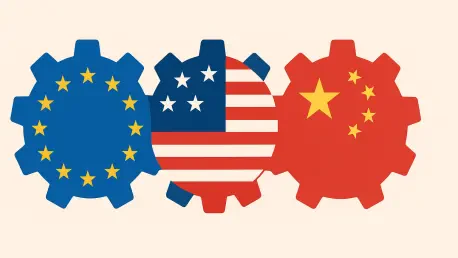
The rapid evolution of artificial intelligence systems has forced a global reckoning over the potential for devastating cyberattacks and threats to national security. In 2026, the proliferation of autonomous agents has transitioned from a technical novelty to a core component of geopolitical

Chairman Selig continues to advocate for a permanent legislative foundation, arguing that executive agency rules lack the long-term stability of a law passed by Congress. This stance comes at a pivotal moment in late 2026 as the Commodity Futures Trading Commission shifts its strategy following the

Standard reporting thresholds still apply to traditional financial institutions, even as the specific proposal targeting self-custodied transactions has been withdrawn. This pivotal announcement on October 5, 2026, has sent ripples through the digital asset markets, signaling an end to a period of