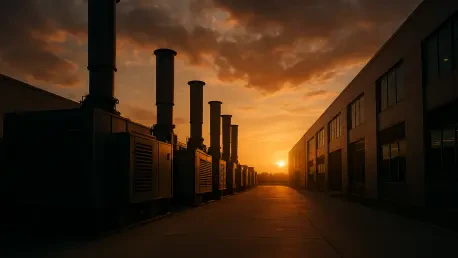

The relentless drive toward artificial intelligence dominance has hit a significant regulatory wall in the American South, where the Colossus supercomputer project stands as a testament to the friction between rapid technological scaling and public health protection. As the global demand for high-performance computing clusters continues to escalate, the infrastructure required to support these systems has transformed from traditional server rooms into massive industrial complexes. This shift has necessitated a reevaluation of energy consumption strategies, particularly as companies seek to bypass the bureaucratic delays inherent in local utility grids. The Colossus project, central to the roadmap of xAI, represents one of the largest concentrations of computational power in the world, yet its reliance on decentralized energy generation has raised fundamental questions about the limits of industrial expansion and the enforcement of the Clean Air Act.
The American South has emerged as a strategic hub for these massive clusters due to favorable land availability and a perceived willingness to accommodate rapid industrial growth. However, the energy demands of projects like Colossus are so immense that they often outstrip the capacity of regional energy grids, leading to a search for alternative power sources. Traditional utility frameworks were not designed to handle the instantaneous load requirements of tens of thousands of advanced graphic processing units operating simultaneously. Consequently, the reliance on high-emission industrial turbines has become a flashpoint for regulatory scrutiny, as authorities struggle to apply decades-old environmental laws to the hyper-speed reality of modern tech development.
The Rapid Expansion of AI Infrastructure and Its Energy Demands
The surge in data center development to support large-scale artificial intelligence has created an unprecedented strain on global energy resources. In the current year, the industry is witnessing a transition where the sheer physical footprint of these facilities is no longer the primary concern, replaced instead by the challenge of procuring gigawatt-scale power. This evolution has driven tech companies to look beyond traditional tech corridors in favor of regions that offer substantial utility headroom.
The Colossus project illustrates the impact these clusters have on regional infrastructure, often requiring more electricity than medium-sized cities. While these projects promise economic revitalization and high-tech jobs, they also introduce complex regulatory hurdles regarding industrial air emissions. The Clean Air Act serves as the primary federal check on such developments, yet the speed at which AI companies deploy hardware frequently outpaces the timeline for environmental impact assessments and the issuance of necessary permits.
Emerging Trends and Market Dynamics in High-Performance Computing
The Race for Computational Power and Grid Sustainability
Modern AI companies are increasingly bypassing traditional utility timelines to achieve rapid deployment of their server fleets. The conventional process for securing grid-scale power can take years, a delay that is incompatible with the fast-moving competitive landscape of machine learning development. To circumvent these bottlenecks, firms are turning to “off-grid” or self-generation energy solutions, installing massive arrays of natural gas turbines directly at their data center sites. This strategy allows for immediate operational status but creates a decentralized network of power plants that often operates outside the oversight of standard utility commissions.
Moreover, there is an evolving focus among both consumers and investors on the environmental, social, and governance impacts of these large-scale operations. As the carbon footprint of AI becomes more transparent, the pressure to maintain sustainability goals is clashing with the technical necessity of using fossil-fuel-based turbines for baseline power. This dynamic is forcing a market correction where the speed of innovation must be weighed against the long-term reputational and legal risks of environmental non-compliance.
Growth Projections for Data Centers and Environmental Impact
Market data indicates a projected increase in kilowatt-per-rack requirements for next-generation hardware. From 2026 to 2029, the energy density of AI server racks is expected to climb significantly, necessitating cooling and power solutions that were previously reserved for the most extreme supercomputing environments. This trend suggests that the reliance on supplemental gas turbines will only increase unless a fundamental shift in energy procurement occurs.
Forecasts regarding cumulative nitrogen oxide emissions from these decentralized turbine sites are particularly concerning for environmental researchers. The localized impact of running dozens of turbines simultaneously can result in smog levels that rival those of heavy manufacturing districts. Performance indicators for the Colossus sites show that while they achieve remarkable computational output, their environmental efficiency lags behind traditional utility-scale power plants which benefit from centralized scrubbing technology and stricter federal monitoring.
Critical Obstacles and Public Health Challenges in the American South
A profound conflict has emerged between corporate speed and public health in regions designated as asthma capitals, such as Memphis. The decision to locate high-emission infrastructure in areas already struggling with poor air quality has reignited debates over environmental justice. Monitoring localized air quality in socioeconomic vulnerable neighborhoods remains a significant challenge, as industrial sensors are often sparse and data is not always accessible to the public in real time.
Technological and logistical hurdles continue to complicate the transition from temporary gas turbines to more sustainable energy sources. While renewable microgrids are a theoretical solution, the immediate need for reliable, around-the-clock power makes them difficult to implement at the scale required for high-performance computing. This tension has led to community-led resistance, with advocacy groups like the NAACP and Earthjustice taking legal action to ensure that industrial expansion does not come at the cost of the health of local residents.
The Regulatory Landscape and the Debate Over Compliance
The core of the legal dispute involves a detailed examination of the “mobile equipment” loophole. By classifying stationary gas turbines as temporary or mobile units, some companies have attempted to avoid the stringent preconstruction and operating air permits required for permanent power plants. This interpretation of environmental law is being challenged in federal courts, as the scale and duration of the equipment use suggest a more permanent industrial presence than the loophole was intended to cover.
The Mississippi Department of Environmental Quality has found itself at the center of this controversy, tasked with overseeing industrial site permits while balancing economic development interests. Legal standards for air permits under federal law require a level of transparency and community engagement that some argue was bypassed in the rush to bring Colossus online. Furthermore, the use of local ordinances and the potential for tax revenue diversion have been proposed as mechanisms for holding tech giants accountable to the communities they inhabit.
Future Outlook for AI Infrastructure and Environmental Justice
Stricter federal oversight of data center energy procurement and emissions is becoming increasingly likely as the scale of the industry grows. Litigation against xAI is expected to redefine how “temporary” industrial equipment is classified, potentially closing the loopholes that have allowed for unpermitted operations. This shift will likely compel tech companies to invest more heavily in renewable microgrids and advanced liquid cooling systems to reduce the environmental footprint of their facilities.
The long-term influence of environmental justice movements will also play a critical role in the site selection process for future hyperscale data centers. Companies that fail to integrate social equity into their development plans may face persistent legal delays and public opposition. As the AI sector matures, the integration of transparent environmental compliance into the core business model will be essential for maintaining both regulatory approval and public trust.
Summary of Industrial Prospects and Ethical Recommendations
The tension between technological innovation and community health rights reached a critical turning point as the legal outcomes of the Colossus case were finalized. These developments provided a clear precedent for future hyperscale data centers, emphasizing that rapid scaling did not grant an exemption from fundamental environmental protections. The industry realized that balancing computational growth with transparent compliance was the only viable path forward for sustainable development.
Stakeholders successfully identified actionable solutions that integrated social equity into the site selection process. They implemented stricter internal audits and prioritized the use of renewable energy microgrids over temporary fossil fuel solutions. This transition validated the necessity of community engagement, ensuring that the future of digital infrastructure was built on a foundation of ethical responsibility and environmental stewardship. This historical shift ultimately protected the right of local citizens to breathe clean air while allowing the artificial intelligence sector to continue its transformative progress.