
The Department for Promotion of Industry and Internal Trade IPR Chair functions as a research hub dedicated to pinpointing traditional products that qualify for legal protection. Across the lush landscapes of Jharkhand, a cultural preservation movement is unfolding as ancient craftsmanship meets modern legal rigor through the National University of Study and Research in Law, Ranchi. This institution has positioned itself as the primary defender of the state’s indigenous identity by leveraging the power of Intellectual Property Rights. By transforming age-old traditions into legally recognized assets, the university ensures that the unique cultural signatures of tribal communities are not lost to the forces of globalization or unauthorized commercial exploitation. The focus remains on Geographical Indication tags, which serve as a collective property right for artisans. This bridge between heritage and law creates a protective shield around the state’s cultural capital, ensuring that the origins of these products remain undisputed and respected globally.
The Mandar Instrument: Securing a Musical Legacy
The Mandar, an iconic percussion instrument, represents the heartbeat of Jharkhand’s vibrant folk traditions and tribal ceremonies. Recognizing its cultural weight, the National University of Study and Research in Law spearheaded a rigorous legal campaign to secure its Geographical Indication status. This journey reached a definitive turning point when the university, acting on behalf of the Raidih Mandar Producer Company Limited, filed the necessary applications to cement the instrument’s regional exclusivity. The process demanded an exhaustive deep dive into historical archives and anthropological studies to prove that the Mandar’s unique construction and acoustic properties are inextricably linked to the geography of Jharkhand. By meticulously cataloging the traditional methods used by craftsmen to stretch hide over the clay or wooden frames, the research team established a clear link between the product and its place of origin. This documentation was vital in building a case that could withstand the scrutiny of the national GI registry.
Beyond the paperwork, the university’s intervention provided a necessary professional platform for indigenous artisans who often lack the resources to navigate complex legal systems. Through the specialized guidance of Intellectual Property experts and dedicated faculty members, the university managed the intricate steps of registry hearings and technical rebuttals. This level of institutional support transformed a local craft into a recognized brand, effectively shielding the community from the influx of low-quality, mass-produced imitations that threaten to undermine traditional livelihoods. The success of the Mandar registration now serves as a foundational model for future initiatives, demonstrating how academic expertise can be channeled into tangible economic benefits for marginalized groups. By establishing this legal precedent, the university has ensured that the Mandar remains a symbol of authentic Jharkhandi heritage, allowing artisans to command fair prices and maintain the integrity of their ancestral skills in a highly competitive market.
Visual and Culinary Arts: Expanding the Scope of Protection
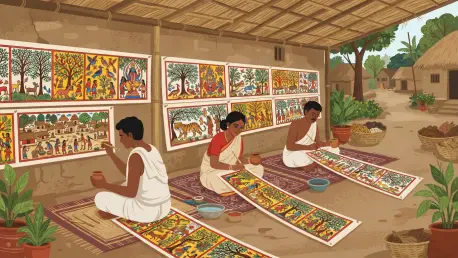
Jharkhand’s visual heritage finds one of its most profound expressions in the Pyatkar paintings of East Singhbhum, an ancient art form that the National University of Study and Research in Law is actively working to preserve. These scroll paintings, known for their unique storytelling techniques and natural pigment palettes, are more than just aesthetic objects; they are vital historical records of the region’s folklore. The university has undertaken a systematic documentation project to capture the specific communal associations and artistic nuances that define this tradition. By filing for a Geographical Indication tag, the institution aims to provide local painters with a legal shield against the dilution of their style by outside commercial interests. This initiative ensures that the intellectual property remains firmly in the hands of the indigenous community, allowing them to maintain the integrity of their narrative craft while gaining professional recognition in the contemporary art market.
In addition to musical instruments and visual arts, the university has extended its protective efforts to the culinary sector, focusing on the cultural significance of the Deoghar Peda. This traditional sweet, synonymous with the city of Deoghar and its historical pilgrimage sites, possesses a distinctive flavor profile derived from local preparation methods and specific regional ingredients. The university has been instrumental in providing the research and documentation necessary to highlight these unique characteristics to the national GI registry. By pursuing legal recognition for this delicacy, the institution seeks to elevate the brand value of Jharkhand’s food heritage, ensuring that local producers are protected from imitation and industrial mass production. Formalizing the status of Deoghar Peda not only preserves a traditional recipe but also creates a pathway for sustainable economic growth, ensuring that the financial benefits of this popular product stay within the local community that has nurtured it for generations.
Institutional Strategy: Empowering Local Communities
At the core of these initiatives lies the strategic operation of the Department for Promotion of Industry and Internal Trade IPR Chair at the university, which serves as a specialized legal and research engine. The Chair’s mandate involves identifying traditional products with high potential for protection and conducting the rigorous data collection required to support legal claims. Furthermore, the university hosts an Intellectual Property Facilitation Centre under the IP Champion MSME Scheme, offering small and medium enterprises a direct line to expert legal counsel and registration assistance. This proactive institutional framework lowers the barrier to entry for local producer groups, making the complex world of intellectual property accessible to those who need it most. By acting as a liaison between the government, the law, and the artisans, the university fosters a robust ecosystem where traditional knowledge is treated as a vital modern asset rather than a forgotten relic of the past.
The university’s comprehensive strategy for cultural preservation shifted the paradigm of heritage management in Jharkhand by integrating legal advocacy with grassroots community engagement. Through these efforts, artisans and cooperatives secured a newfound sense of ownership over their cultural capital, allowing them to navigate the modern economy with greater confidence and institutional backing. The roadmap established by these GI registrations provided clear actionable steps for other regions seeking to protect their indigenous knowledge from exploitation. Looking forward, the focus moved toward creating sustainable marketing channels and digital platforms to further amplify the visibility of these certified products. By establishing a professional standard for cultural documentation and legal defense, the university demonstrated that the preservation of history is fundamentally linked to the economic empowerment of the people. This approach ensured that the legacy of Jharkhand’s traditions remained resilient, profitable, and respected on national stages.