
Desiree Sainthrope is a preeminent legal expert who has spent decades at the intersection of international trade and regulatory compliance. With a background that spans the intricacies of intellectual property and the high-stakes world of global treaty negotiations, she has become a leading voice on how emerging technologies reshape our legal landscape. As we navigate the complex rollout of automated systems and massive infrastructure projects, her insights provide a roadmap for balancing rapid innovation with the fundamental protections of a democratic society. In this conversation, we explore the legislative shift toward regulating the physical and digital footprints of the modern world.
The Power Act represents a significant shift in how we view the infrastructure behind digital innovation, specifically regarding its physical footprint. Beyond the basic requirements for energy consumption, what does this legislation reveal about the hidden costs of our reliance on hyperscale data centers?
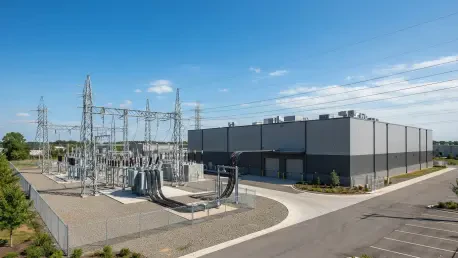
The Power Act is a direct response to the realization that the digital cloud has a very heavy, very physical anchor in our local communities. When we look at these hyperscale data centers, we aren’t just looking at buildings full of servers; we are looking at massive resource drains that demand a rethinking of our environmental and social priorities. This legislation pulls back the curtain on the “upfront costs” that these facilities often externalize, mandating strict transparency regarding their grid commitments and air quality impacts. It is a sensory issue as much as a policy one, as neighbors frequently deal with the relentless, low-frequency hum of cooling fans that can disrupt the peace of an entire district. By requiring these centers to be built with union labor, the law ensures that while these giants consume our local resources, they are at least providing high-quality, stable jobs for the people living in the shadow of their cooling towers. We are moving away from a model of “growth at any cost” toward one where the 17th and 18th districts can demand that their energy and air remains a priority.
There is an intense debate surrounding the concept of “Frontier AI,” often confusing it with standard algorithms or simple automation. How do you define the unique risks of these advanced systems, and why do they necessitate a different level of oversight than the tools we have used for the past decade?
Frontier AI is a transformative leap forward that compares more closely to the discovery of fire than to the invention of the automobile because of its sheer capacity for self-improvement. Unlike traditional algorithms, which operate within a fixed set of human-defined parameters, Frontier AI represents the most powerful, large-scale, general-purpose models that can actually evolve without direct human interaction. This autonomy creates a regulatory vacuum where the technology might outpace the very people who designed it, leading to unpredictable safety outcomes. The Illinois Frontier AI Safety Law recognizes this by moving past the “analog” mindset of the past and focusing on systems that could potentially fail in ways that threaten national security or economic stability. It is about creating a “safe space” for development that doesn’t sacrifice the public interest for the sake of speed, ensuring that if a system goes rogue, there is a direct line to the Department of Homeland Security. We are essentially trying to build a cage for a lion that hasn’t finished growing yet, which requires a level of foresight we’ve rarely seen in tech policy.
Illinois has taken an unprecedented step by becoming the first state to require third-party safety audits for these advanced systems. In your view, how does this independent verification change the power dynamic between tech giants and the public?
The requirement for third-party safety audits is a landmark move because it breaks the cycle of “self-regulation” that has dominated the tech industry for the last few years. For too long, we have relied on the promises of industry participants who have a vested financial interest in moving fast, but this law introduces a neutral set of eyes into the process. This “reasonable approach” ensures that safety protocols aren’t just checked boxes on a corporate memo but are verified by experts who answer to the public interest rather than a board of directors. It shifts the burden of proof from the constituents to the companies, forcing them to demonstrate that their models won’t cause systemic harm before they are widely deployed. This creates a much-needed layer of accountability, especially when you consider that stakeholders now include everyone from local non-profits to individual residents. It is a realization that in a democracy, the power to monitor such “transformative technology” should never be held solely by the people who stand to profit from it.
Public sentiment toward data centers is surprisingly unified, with roughly 72% of the population expressing disapproval or skepticism. Why do you think there is such a profound disconnect between the industry’s vision of progress and the concerns of the average citizen?
The disconnect stems from a fundamental lack of understanding about what these data centers actually bring to a community, coupled with a very real fear of their environmental appetite. To many people, a data center is a massive, windowless fortress that consumes an incredible amount of electricity and water while providing very few visible benefits to the neighborhood. This 72% figure is a loud signal that the public feels like they are being asked to sacrifice their local grid stability and air quality for a digital service they don’t fully trust. There is a sense of being “drowned out” by the needs of big tech, which is why the legislative process has become so focused on building consensus through coalitions. People are starting to realize that while they enjoy the convenience of AI, they don’t want the physical infrastructure to degrade their own quality of life. It takes a lot of negotiation and back-and-forth to bridge that gap, and lawmakers are finding that they have to act as translators between the high-tech aspirations of the industry and the grounded, practical concerns of their constituents.
We are seeing a growing concern in the academic world, particularly at institutions like Loyola, where the reliance on AI is perceived as a threat to critical thinking. How does the legislative framework address the psychological and educational impacts of a society that might be outsourcing its intellect to machines?
The impact of AI on the human mind is one of the most subtle yet dangerous risks we face, and it’s heartening to see students and faculty sounding the alarm. When students rely on AI to the point of total dependence, studies have shown a significant decrease in their ability to perform the kind of deep, critical thinking required for higher education. We are even seeing a counterproductive cycle where faculty members use AI to detect student AI use, creating a “feedback loop” that ignores the actual learning process. This is why some honors programs are taking the radical step of prohibiting technology in classrooms—to reclaim the space for human discourse and intellectual struggle. While the law can regulate the energy use of a data center, the “ramifications of how AI psychologically impacts you” are much harder to codify. Legislation can provide the safety guardrails, but it is up to our educational institutions to ensure that we don’t raise a generation that has lost the ability to write or think independently.
The legislative process for these bills has been described as a “measured approach” that avoids panic. In an era where technology moves at a breakneck pace, how do lawmakers balance the need for speed with the necessity of expert-driven, deliberate policy?
Lawmakers are often in a position where they know “a little about a lot of things,” which makes the role of experts and coalitions absolutely vital. The goal is to avoid the “panic” that leads to sweeping, poorly drafted regulations that might accidentally stifle beneficial innovation or fail to address the actual risks. By bringing in a wide range of experts—from environmental scientists to AI developers—lawmakers can build a consensus that reflects the complexities of the real world rather than just reacting to the headlines of the day. It’s a slow, often frustrating process of negotiation because building a democracy is, by its nature, not an easy thing. They have to weigh the economic pressure of Governor Pritzker’s administration against the environmental concerns of the local districts, all while trying to predict where the technology will be in two or three years. This measured pace is actually a strength, as it ensures that the resulting laws, like the Frontier AI Safety Law, are robust enough to handle the transformative changes we are currently witnessing.
There is a geographic reality to this issue, where a data center built “across the river” or across a state border can still have a massive impact on the local grid. How does regional cooperation play into the success of these new regulations?
The energy grid doesn’t recognize state lines, which means that any data center built in a neighboring region will have immediate, major impacts on Illinois’ own power stability and costs. Representative Gong-Gershowitz has been very clear that these facilities will be built somewhere regardless of our specific local bans, so the challenge is to make sure they are built under the right conditions. If a neighboring state has lax regulations, they might attract the development, but we still end up breathing the same air and drawing from the same regional energy pools. This creates a “race to the bottom” risk that can only be countered by strong, regional legislative frameworks and interstate coalitions. We have to make a choice now to lead with high standards, hoping that our regulatory model becomes the blueprint for others to follow. It is about realizing that “none of this is inevitable” and that we have the power to shape the regional landscape if we act with a unified strategy.
What is your forecast for the evolution of AI oversight as these systems become more deeply integrated into our daily lives over the next few years?
My forecast is that we will see a shift from broad, sweeping “catch-all” bills to highly specialized, sector-specific regulations that mirror the Illinois approach to Frontier AI. We are going to move away from the “wild west” era of tech development and into a period where the physical and psychological costs of innovation are priced into the business model. I expect that by 2028, we will see a national standard for third-party audits, largely driven by the pioneering work being done in state legislatures right now. The public’s skepticism will likely remain high, which will force companies to be more transparent about their resource consumption and more vocal about the tangible benefits they offer to local communities. Ultimately, the success of AI won’t be measured by the power of its algorithms, but by how well it integrates into a society that demands safety, labor rights, and environmental sustainability as non-negotiable conditions of its existence. We are at a crossroads where we must choose to govern technology, or let technology govern us—and I believe the legislative movement we are seeing today shows we are choosing the former.