
The Eighth U.S. Circuit Court of Appeals has previously ruled that the limited collection of vehicle data on public roadways does not violate the Fourth Amendment’s protection against unreasonable searches. This judicial foundation underpinned a comprehensive briefing delivered by Sedalia Police Chief David Woolery during a recent City Council session regarding the department’s use of Flock Safety surveillance technology. As modern policing increasingly relies on high-tech solutions to address complex criminal activities, the tension between public safety initiatives and individual privacy rights has become a focal point of local governance. Chief Woolery’s presentation was specifically designed to address these concerns by detailing the operational limitations and administrative safeguards inherent in the city’s license plate recognition system. By providing a clear technical overview and citing specific legal benchmarks, the Chief attempted to foster a transparent dialogue with residents who remain wary of expanding surveillance networks within their neighborhoods.
Surveillance Infrastructure: Operational Scope and Accountability
Defining Technical Capabilities and Privacy Protections
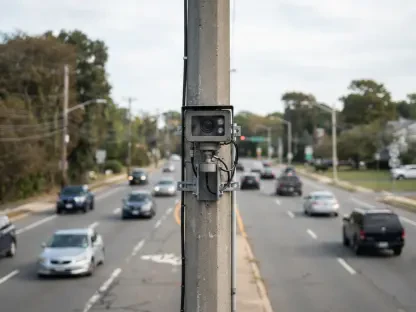
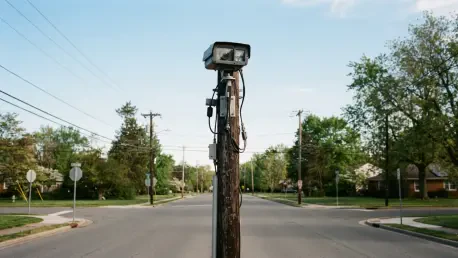
The physical architecture of Sedalia’s current surveillance program consists of an integrated network featuring 11 automated license plate reader cameras alongside three specialized Condor stationary video units. These devices are strategically positioned at high-traffic intersections and known high-incident areas to provide law enforcement with objective, real-time data regarding vehicle movements. While the ALPR units focus on capturing license plate numbers and distinctive vehicle characteristics, the Condor units offer a broader perspective through stationary video surveillance, which is particularly useful for monitoring areas with high call volumes. This entire infrastructure is a key component of the department’s current strategic plan, with dedicated funding secured through fiscal year 2027 to ensure long-term operational stability. Chief Woolery clarified that these cameras are not intended for broad surveillance but are instead targeted tools aimed at enhancing the department’s ability to respond to and investigate specific criminal events.
To address the significant privacy concerns raised by the community, the police department has implemented several non-negotiable technological guardrails within the Flock system. Most notably, the technology is strictly prohibited from utilizing facial recognition capabilities or collecting any form of biometric data from pedestrians or drivers. Furthermore, the system does not engage in the monitoring of personal cellular devices or the interception of private communications, ensuring that the scope of data collection remains confined to vehicle-related information on public thoroughfares. In a move to prevent the creation of permanent tracking records, the department enforces a rigorous 30-day data retention policy, after which all captured images and associated metadata are automatically and permanently purged from the server. Additionally, the city’s contract with the service provider explicitly forbids the sale of any gathered information to third-party commercial interests, maintaining the integrity of the data as a strictly law enforcement asset.
Implementing Oversight and Demonstrating Results
Administrative oversight is maintained through a multi-layered accountability structure that restricts access to the Flock database to only those officers who have completed specialized training. Every individual search performed by an officer must be documented with a specific case number, a valid investigative reason, and a designated offense type to prevent unauthorized or recreational use of the technology. These logs are subjected to regular internal audits, with Commander Elwood providing weekly usage reports to the Chief to ensure total compliance with established departmental policies. The software itself features automated flagging mechanisms that alert administrators to any unusual search patterns or potential deviations from standard operating procedures. Chief Woolery emphasized that information retrieved from the system is treated as an investigative lead rather than definitive evidence. This means that officers are required to independently verify all data and vehicle matches through traditional police work before making any arrests.
The practical value of this surveillance network was illustrated through several successful investigative outcomes that highlight its role as a significant force multiplier for the department. In one instance, the technology played a pivotal role in a multi-state Silver Alert involving a missing elderly woman, allowing investigators to track her vehicle’s path and coordinate with agencies in Arkansas for her safe recovery. Another compelling case involved a violent robbery at a local ATM, where investigators had only a partial license plate and a vague description of a dark sedan with a missing hubcap. By utilizing the filtering capabilities of the system, the police were able to identify the suspect vehicle and make an arrest within 80 minutes of the crime being reported, ultimately leading to a guilty plea and a seven-year prison sentence. These case studies serve to demonstrate how the integration of automated data can accelerate the resolution of time-sensitive cases that might otherwise take days or weeks to solve using conventional methods.
Regulatory Compliance and Community Engagement
Navigating Regulatory Frameworks and Program Costs
The legal framework supporting Sedalia’s use of ALPR technology is anchored in established American jurisprudence and state-level regulatory mandates. Chief Woolery pointed to rulings from both the Fifth and Eighth U.S. Circuit Courts of Appeals, which have consistently held that capturing vehicle data in public spaces does not infringe upon constitutional protections. Furthermore, the department remains in strict alignment with Missouri Governor Mike Kehoe’s Executive Order 26-18, which sets clear standards for data deletion and prohibits the use of such technology for facial recognition or commercial profit. The Chief reiterated that his primary duty is the protection of constitutional rights and that the department’s policies are designed to honor that oath while utilizing modern tools to maintain public order. This adherence to legal standards is intended to provide a transparent basis for the program, ensuring that the deployment of surveillance technology does not outpace the fundamental rights of the citizenry in Sedalia.
From a fiscal perspective, the city invests approximately $43,500 annually to maintain the entire camera network, a figure that includes both the ALPR units and the additional Condor video systems. Specifically, the license plate readers account for $33,000 of the yearly budget, while the stationary video units require an investment of $10,500. During the council session, officials discussed the strategic placement of these assets, questioning whether certain units originally deployed for specific projects should be relocated to areas with higher call volumes, such as public parks or busy commercial districts. This ongoing evaluation is part of a broader effort to ensure that taxpayer resources are utilized in the most efficient manner possible to address the community’s safety needs. By analyzing crime trends and officer feedback, the department aims to optimize the placement of each camera to maximize its investigative impact. This dynamic approach allows the city to adapt its technological footprint in response to shifting crime patterns and urban development.
Addressing Public Feedback and Determining Future Steps
Despite the documented successes and the robust oversight measures presented by the police department, a segment of the Sedalia community remains skeptical about the long-term implications of the program. Residents pointed to recent reports indicating that nearly 150 cities across the country have reconsidered or canceled their contracts with surveillance providers due to concerns about mission creep and privacy violations. Furthermore, some community members highlighted local crime statistics from platforms like NeighborhoodScout to argue that the presence of high-tech cameras has not yet resulted in a noticeable decrease in property crimes or nighttime suspicious activity. This disconnect between the department’s technical efficiency and the public’s perception of safety suggests that the mere presence of surveillance technology is not a panacea for all community concerns. The debate underscored a fundamental desire for tangible proof that these investments are directly contributing to a safer environment for the average citizen.
The dialogue between the Sedalia Police Department and the City Council established a framework for how the city will evaluate its technological investments in the coming years. By emphasizing the necessity of human oversight and independent verification, the department sought to assure the public that technology remained a subordinate tool to professional judgment. Moving forward, the city council planned to implement more frequent public reviews of the program’s efficacy to maintain a high level of transparency and community trust. Law enforcement leadership focused on refining the placement of cameras to better address the specific types of property crimes that residents cited as their primary concern. This collaborative approach aimed to ensure that the surveillance program evolved in a way that was both fiscally responsible and ethically sound. Ultimately, the decision-making process reflected a commitment to balancing the operational needs of modern policing with the values of privacy and local accountability that the community expected.