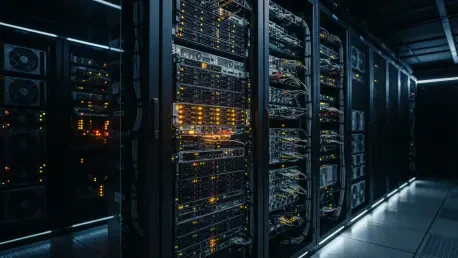

The skyline of the Seoul metropolitan area is rapidly transforming as the South Korean government initiates a high-stakes gamble to secure its position in the global digital hierarchy. During a recent Regulatory Rationalization Committee session led by President Lee Jae-myung, the Ministry of Science and ICT unveiled an ambitious blueprint aimed at dismantling the bureaucratic gridlock that has historically hindered large-scale infrastructure projects. This strategy, identified as a core component of the nation’s three mega projects, seeks to elevate the country beyond its traditional semiconductor dominance into a hub for artificial intelligence data centers. By prioritizing rapid deployment and technological self-reliance, the administration intends to foster an environment where high-speed computing thrives without the usual administrative friction. This shift reflects a geopolitical necessity to maintain technological sovereignty in an era where data processing power serves as the primary currency of national influence.
Streamlining Administrative Processes and Regulatory Frameworks
To accelerate the transition toward a data-centric economy, the government is moving away from the fragmented approval processes that have traditionally delayed critical construction timelines. Under the new guidelines, a unified one-stop administrative track will handle complex assessments involving power grid impact, landscape aesthetic reviews, and traffic logistics simultaneously. By introducing new subordinate decrees, the Ministry of Science and ICT aims to bypass the redundant preliminary reviews that often result in circular requests for supplementary documentation from various central agencies. This centralized approach is designed to provide developers with a predictable and efficient roadmap, reducing the time from site acquisition to server deployment. Consequently, this administrative overhaul is expected to attract significant private investment by lowering entry barriers for both domestic and international operators looking to establish large-scale AI operations within the Korean Peninsula.
Beyond mere paperwork reduction, the government is redefining how data centers are categorized under national building codes to better reflect their unique operational nature. Traditional zoning laws often treat these facilities like standard office buildings, mandating extensive parking facilities and electric vehicle charging stations that remain largely unused in unmanned server environments. The new regulatory framework acknowledges that data centers primarily house cooling systems and server racks rather than high-density human staff, allowing unmanned sections to be excluded from certain floor-space calculations. This specific adjustment significantly lowers the burden of providing unnecessary amenities, thereby maximizing the usable area for actual computing hardware. By aligning legal definitions with modern technological realities, the administration ensures that valuable land is utilized with maximum efficiency, addressing persistent industry complaints regarding the mismatch between urban planning and high-tech infrastructure.
Strengthening Domestic Supply Chains and Regional Cooperation
In an effort to shield the domestic tech industry from the volatility of global supply chains, the ministry committed approximately 200 billion won starting this year to incentivize the localization of critical components. This investment focuses on the internal development of essential materials, hardware parts, and specialized software solutions that form the backbone of modern AI data centers. By reducing the heavy reliance on foreign technology providers, South Korea seeks to cultivate a self-sustaining ecosystem where local manufacturers can thrive alongside global tech giants. The funding is strategically allocated to support research and development initiatives that prioritize energy efficiency and high-performance hardware optimized for artificial intelligence workloads. This proactive stance is intended to insulate the national digital infrastructure from geopolitical shifts that might otherwise disrupt the availability of high-end processing units or cooling technologies, ensuring that the country maintains control over its digital future.
The strategic roadmap for the AI data center sector established a clear path for the nation to redefine its industrial identity within the global technology race. Government officials and industry leaders recognized that success depended on the seamless integration of regulatory flexibility and social acceptance. Moving forward, the focus shifted toward the actual implementation of these policies, with a particular emphasis on monitoring the environmental impact of massive energy consumers. Actionable next steps included the standardization of communication protocols between local governments and operators to ensure that transparency remained a priority. The initiative also called for ongoing evaluations of the localized supply chain to identify any remaining gaps in production. By treating these facilities as essential public infrastructure, the administration sought to create a resilient digital foundation. This comprehensive approach underscored the necessity of balancing aggressive industrial goals with a sustainable and community-oriented vision for national growth.