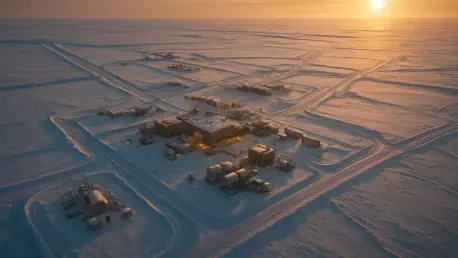

The sheer scale of the National Petroleum Reserve-Alaska represents one of the final frontiers where the balance between industrial appetite and ecological preservation is being redrawn in real time. Spanning approximately 23 million acres, this vast landscape functions as a strategic energy hub for the United States, yet it remains at the center of a deep-seated regulatory tug-of-war. The primary challenge involves reconciling the legal mandate for maximum protection of surface values with an administration-led push for expedited industrial expansion across previously restricted zones.
Recent developments have highlighted the influence of major institutional players, including the Department of the Interior and the Alaska Oil and Gas Association, as they navigate the interests of Indigenous stakeholders. The existing infrastructure, centered largely on the Willow project, serves as a critical benchmark for future development. This project has set a precedent for how large-scale extraction can be integrated into the Arctic, even as critics argue that the pace of growth threatens to outstrip the capacity for environmental oversight.
The Current State of Energy Extraction and Land Management in the Western Arctic
The management of the Reserve currently operates under a framework that seeks to optimize resource recovery while honoring the ecological significance of the tundra. However, the tension between these two goals has never been more pronounced. Current federal strategies prioritize the acceleration of lease approvals, effectively signaling a shift toward a more industry-centric approach. This transition is not merely administrative; it reflects a fundamental change in how the government values the long-term integrity of Arctic ecosystems compared to immediate energy output.
The significance of the Willow project cannot be overstated, as it represents the current frontline of industrial capability in the region. Infrastructure development has moved beyond traditional clusters, reaching further into the Reserve than ever before. For many stakeholders, this expansion is a sign of economic progress and energy security. For others, it marks the beginning of a process that could fundamentally alter the subsistence patterns and cultural heritage of the Indigenous communities that have relied on these lands for generations.
Shifting Tives: Key Trends and Market Projections in Arctic Development
Emerging Trends in Regulatory Policy and Industrial Interests
A defining trend in the current landscape is the aggressive move toward deregulation, characterized by the dismantling of long-standing National Environmental Policy Act requirements. This shift is designed to shorten the permitting timeline, moving away from comprehensive studies toward a more streamlined, industry-led model. By prioritizing petitions from oil and gas entities, the federal government is effectively delegating the pace of development to the market rather than to environmental agencies.
Technological advancements have also played a pivotal role in this evolution, with seismic testing and exploration now utilizing more efficient methodologies. The use of temporary ice roads and airstrips allows for a reduced footprint in some areas, yet the sheer volume of these activities creates a cumulative impact that remains difficult to quantify. As industry interests move toward a more autonomous operational model, the role of public oversight is being steadily diminished in favor of private-sector efficiency.
Growth Forecasts and the Economic Trajectory of the Reserve
Market projections for the Reserve indicate a significant uptick in lease sales, especially following the decision to open 82% of the territory to drilling activities. Economic indicators suggest that the performance of the million-acre auction held in March 2026 has bolstered investor confidence in Arctic fossil fuel extraction. This momentum is expected to drive a surge in the construction of both permanent and temporary industrial structures through the end of the decade.
The economic trajectory of the Western Arctic is increasingly tied to global energy demand and the relative cost of extraction in climate-stressed environments. While high-cost Arctic projects are often vulnerable to price fluctuations, the current regulatory environment offers enough incentives to maintain a steady flow of capital. The anticipated growth in production phases suggests that the Reserve will remain a cornerstone of domestic energy policy for the foreseeable future, despite the ecological volatility of the region.
The Complex Hurdles Facing the Deregulation Agenda
The push for deregulation faces significant legal obstacles, particularly concerning the Naval Petroleum Reserves Production Act of 1976. This historical mandate requires the protection of specific environmental and subsistence resources, a standard that many argue is being ignored by new permitting rules. Legal conflicts are expected to arise as new projects are fast-tracked, potentially leading to a period of intense litigation that could stall industrial progress and create uncertainty for investors.
Beyond the courtroom, the physical reality of the Arctic presents its own set of logistical nightmares. Maintaining heavy machinery on a thawing tundra is increasingly difficult as climate change shortens the operational window for ice roads. The risk of permanent ecological scarring from seismic disruption is a constant concern, as the fragile surface of the Reserve does not recover quickly from industrial intrusion. These physical limitations serve as a natural check on the speed of deregulation.
The Evolving Regulatory Landscape and Oversight Mechanisms
The most controversial element of the current regulatory shift is the proposed removal of site-specific Environmental Impact Statements. By utilizing categorical exclusions, the federal government can bypass the detailed analysis usually required for exploration and testing. This move limits the ability of scientists and the public to evaluate the unique risks associated with specific locations, replacing a data-driven process with a broader, less rigorous standard of review.
Furthermore, the repeal of protections for designated Special Areas like Teshekpuk Lake and the Colville River has sparked alarm among conservationists. These regions were historically off-limits due to their critical role in caribou migration and bird nesting. The transition from comprehensive public notification to a more closed-door collaboration between federal agencies and industry leaders suggests a move toward a “rubber stamp” permitting process that prioritizes speed over transparency.
Future Outlook: Innovation, Disruption, and the Arctic Environment
The long-term impact of truncated permitting on climate resiliency remains a central question for the future of the Western Arctic. While expedited approvals may boost short-term production, they may also leave the environment more vulnerable to the cumulative effects of industrialization. Market disruptors, such as legal injunctions filed by groups like Earthjustice, will likely play a major role in shaping the actual pace of development, potentially forcing a return to more stringent oversight.
Innovation in extraction technology could mitigate some environmental risks, yet the overall trend points toward a period of rapid industrial transformation. Certain regions of the Reserve are more vulnerable than others, and the focus of development is expected to shift toward these high-potential but sensitive areas. The interplay between global economic conditions and local ecological constraints will ultimately determine whether the Western Arctic remains a productive energy source or becomes a symbol of regulatory overreach.
Summary of Prospects and the Path Toward Sustainable Oversight
The analysis of the Western Arctic revealed that the shift toward expedited permitting significantly altered the relationship between federal oversight and industrial interests. Researchers found that the truncation of public comment periods to a sixty-day window limited the depth of environmental scrutiny. This trend indicated that the federal government prioritized immediate energy output over the long-standing mandate for ecological preservation. The data suggested that while lease sales increased, the legal and logistical foundations for these projects remained fragile.
Strategic shifts in land management pointed toward a future where the preservation of public lands must be balanced with the realities of energy independence. The report established that a successful path forward required a more transparent integration of Indigenous knowledge and modern environmental science. Experts concluded that the removal of site-specific reviews created risks that could not be fully mitigated by technology alone. Ultimately, the transition to a more industry-driven model showed that the Western Arctic’s future would be defined by the tension between economic necessity and the irreversible changes to its delicate ecosystem.