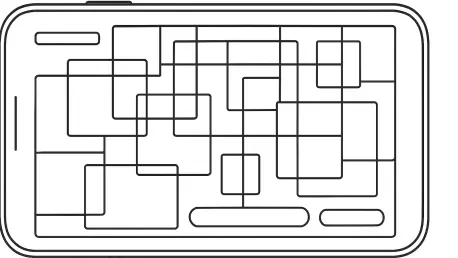

The visual economy has successfully transitioned from traditional physical storefronts to immersive digital layers where every single pixel now holds quantifiable commercial value for global stakeholders and innovators alike. As software continues to eat the world, the aesthetics of the interface have become inseparable from the utility of the application, creating a marketplace where a unique icon or a fluid gesture-based animation is as valuable as a physical industrial design. In the United States, the legal machinery has adapted to treat these intangible assets with the same rigor once reserved for mechanical inventions, establishing a multidimensional shield that combines design patents, copyright, and trademark law. This report explores the mechanisms of this protection, the friction between aesthetics and utility, and the roadmap for securing digital equity in an increasingly spatial computing environment.
The current landscape is defined by the convergence of traditional software interfaces and high-fidelity virtual environments, where the distinction between a product and its representation has largely vanished. Major market players are no longer competing solely on the basis of code efficiency but on the “stickiness” of their digital aesthetics, which drives user loyalty and brand recognition across diverse ecosystems. Regulatory bodies, led by the United States Patent and Trademark Office, have moved toward a more flexible interpretation of what constitutes an article of manufacture, ensuring that virtual assets—even those without a permanent physical display—receive the full weight of federal protection. This shift is particularly evident in the rise of digital twins and the tokenization of virtual goods, where the visual design serves as the primary differentiator in crowded marketplaces.
The Current Landscape of Digital Aesthetics and Virtual Assets
The modern digital economy operates on the premise that visual engagement is the primary currency of the user experience, leading to a massive expansion in the scope of protected virtual assets. No longer confined to the static icons of the early computing era, virtual designs now encompass dynamic graphical user interfaces, 3D spatial environments, and sophisticated digital avatars that interact within augmented reality frameworks. This segment of the industry is currently characterized by its rapid integration with hardware, where the design of the software interface is engineered to be as iconic as the physical device it inhabits. The significance of this integration cannot be overstated, as it creates a seamless brand experience that spans the gap between the tactile world and the digital realm.
Technological influences, particularly the proliferation of high-resolution displays and wearable optics, have forced a reevaluation of traditional intellectual property boundaries. Market players from the semiconductor industry to high-fashion retail are now filing design patents for virtual storefronts and interactive menu systems that exist only in a wearer’s field of vision. These assets are governed by a patchwork of regulations that prioritize the ornamental nature of the design over its underlying technical function. As a result, the industry has seen a surge in collaborative efforts between legal experts and creative directors to ensure that every visual element, from the way a window shadows its background to the specific curvature of a virtual button, is documented and protected against unauthorized replication.
Furthermore, the rise of decentralized platforms has introduced new complexities regarding the enforcement and jurisdictional reach of United States intellectual property laws. While the USPTO provides a robust framework for domestic protection, the global nature of virtual assets means that designers must navigate a labyrinth of international standards and treaties. The current state of the industry is one of transition, where the legal definitions of “manufacture” and “fixation” are being stretched to accommodate the fluid and often ephemeral nature of digital designs. This evolution is driven by the necessity of providing a stable investment environment for the billions of dollars currently flowing into the development of spatial computing and high-level digital interactivity.
Market Dynamics and the Evolution of Digital Interface Protection
Key Trends Shaping the Virtual Design Industry
The primary trend currently redefining the virtual design space is the shift from two-dimensional surfaces to three-dimensional, spatialized interaction models. As users move toward more immersive experiences, designers are focusing on depth, translucency, and environmental awareness, creating interfaces that react to the physical lighting and geometry of the room. This trend has led to an explosion in “generative aesthetics,” where AI-assisted design tools allow for the rapid creation of complex visual frameworks that still require human-led IP filing to secure ownership. The focus has moved from static icons to “behavioral design,” where the unique way an interface moves or responds to a user’s gaze is considered a protectable ornamental feature.
Consumer behavior is also driving a demand for hyper-personalization, which in turn influences how companies approach design protection. Users now expect to be able to customize their digital environments, leading brands to create modular design systems where the core elements remain fixed and protected while allowing for user-led variations. This creates a new market driver where the “brand language” of the design—the consistent visual logic across all variations—becomes the most critical asset to safeguard. Consequently, market opportunities are emerging for firms that specialize in “design auditing,” ensuring that even the most customizable virtual assets retain the core identifiable features necessary for trade dress and patent enforcement.
Growth Indicators and Future Market Projections
Recent data suggests a significant upward trajectory for the virtual design sector, with filings for screen displays and icons in the United States showing a steady increase from 2026 to 2028. This growth is mirrored by the expanding valuation of software companies that prioritize design as a core competitive advantage, with market performance indicators pointing to a direct correlation between design patent density and long-term brand equity. Projections indicate that the market for virtual goods and their associated designs will continue to outpace traditional manufacturing sectors, driven by the low cost of digital reproduction and the high margins associated with licensed aesthetic assets.
Looking ahead, the forecast for the period spanning from 2026 to 2029 suggests that spatial computing interfaces will account for nearly forty percent of all new digital design filings. This shift represents a fundamental change in the IP landscape, as companies move away from protecting single icons toward securing entire “design languages” that define their virtual ecosystems. The performance of these assets will likely be measured by their ability to maintain distinctiveness in an increasingly crowded digital landscape, where the threat of AI-generated clones is ever-present. Investment in virtual design is no longer a speculative venture but a strategic necessity for any organization looking to maintain a presence in the next generation of the consumer internet.
Navigating Legal Hurdles and the Functionality Doctrine
One of the most persistent obstacles in the protection of virtual designs is the functionality doctrine, which prevents companies from using intellectual property rights to monopolize useful features of a product. In the context of digital interfaces, this creates a complex hurdle where a design must be “ornamental” rather than purely “functional” to qualify for a design patent. For instance, if a specific layout of buttons is the only logical way to navigate a piece of software, it may be deemed functional and therefore unprotectable. This tension requires designers to intentionally incorporate non-functional, aesthetic choices into their work, ensuring that the visual identity is distinct from the underlying utility of the application.
Technological challenges further complicate this landscape, as the line between a design and a functional tool becomes blurred in augmented reality environments. When a virtual design interacts with the real world—such as a digital instruction manual that overlays steps onto a physical engine—the law must decide whether the visual elements are protectable art or merely a functional display of data. Potential strategies to overcome these hurdles involve a “layered” approach to IP filing, where companies separate the functional software logic from the artistic expression of the interface. By doing so, they can protect the “look and feel” through design patents and copyright while leaving the functional utility to be addressed by utility patents or trade secrets.
Regulatory hurdles also exist in the way the USPTO evaluates the “article of manufacture” requirement for digital assets. Historically, a design had to be tied to a physical object, but current interpretations have expanded this to include the display screen itself. However, as we move toward screenless displays and holographic projections, the industry faces a potential gap in protection. Strategic solutions are being developed through advocacy for updated statutory language that recognizes the “digital medium” as a valid article of manufacture. This would ensure that designers working in the most cutting-edge fields are not left without recourse when their spatial designs are misappropriated by competitors operating in less regulated jurisdictions.
The Regulatory Framework for Graphical Interfaces and XR Environments
The regulatory landscape for virtual designs in the United States is currently governed by a sophisticated interplay of statutory law and administrative guidelines from the USPTO. Central to this framework is the manual of patent examining procedure, which provides the criteria for evaluating computer-generated icons and graphical user interfaces. These guidelines emphasize that a design must be “fixed” to an article of manufacture, a requirement that has been broadly interpreted to cover the pixels on a screen. Recent updates to these standards have focused on “extended reality” (XR) environments, providing a clearer path for the protection of designs that exist in three-dimensional space or are projected via laser into the user’s retina.
Compliance with these regulatory standards is essential for maintaining a competitive edge, as even minor errors in the filing process can lead to the invalidation of a patent. Security measures, such as digital watermarking and blockchain-based timestamping, are increasingly being used to prove the date of creation and the “fixation” of a virtual design, providing an additional layer of evidence during the examination process. Moreover, the role of international treaties, such as the Hague Agreement, has become central to industry practices, allowing U.S.-based designers to seek protection in multiple jurisdictions through a single application. This harmonization of standards is critical for a market where digital assets can be accessed and copied globally within seconds of their public launch.
Significant laws like the Lanham Act and the Copyright Act of 1976 continue to provide the bedrock for protecting the expressive and brand-identifying aspects of virtual designs. The Lanham Act, in particular, governs trade dress, which protects the “total image” of an interface if it has acquired enough distinctiveness in the minds of consumers. In contrast, copyright law provides automatic protection for the artistic elements of a design from the moment of creation, though formal registration remains a prerequisite for litigation. These regulatory frameworks are currently being tested by the rise of decentralized platforms, where traditional concepts of “ownership” and “control” are being redefined by smart contracts and peer-to-peer distribution models.
The Future of IP Enforcement in the Metaverse and Spatial Computing
The trajectory of the virtual design industry is pointed toward an era of spatial computing where the “metaverse” serves as a primary hub for commerce, social interaction, and creative expression. In this future, the enforcement of intellectual property rights will move beyond simple takedown notices and into the realm of real-time digital rights management. Emerging technologies like spatial anchors and persistent digital signatures will likely play a role in identifying protected designs as they are moved across different virtual platforms. This will allow creators to maintain the integrity of their designs even when they are accessed in environments that the original designer did not create or control.
Potential market disruptors, such as the democratization of high-end design tools through generative artificial intelligence, will challenge the current concepts of “originality” and “authorship.” As it becomes easier for non-professionals to create sophisticated virtual designs, the value of a strong IP portfolio will only increase, serving as a vital differentiator in a sea of AI-generated content. Consumer preferences are also shifting toward “interoperable” assets, where a design purchased or used in one virtual environment can be carried into another. This creates a massive opportunity for growth in the licensing sector, as companies will need to develop standardized legal frameworks for the cross-platform use of their protected visual assets.
Innovation in the field of digital forensics will also be a major factor in the future of IP enforcement, as legal teams will need more advanced tools to track and prove the infringement of complex, dynamic designs. Global economic conditions will continue to influence where these designs are developed and protected, with the United States remaining a preferred jurisdiction due to its robust legal protections and specialized courts. The intersection of regulation and innovation will likely lead to a new class of “virtual property rights” that combine elements of traditional real estate law with modern intellectual property standards, providing a comprehensive framework for the ownership of digital space and the designs that inhabit it.
Strategic Summary of Virtual Design Rights and Investment Potential
The investigation into the United States intellectual property framework for virtual designs revealed a system that successfully adapted to the complexities of the digital age by bridging the gap between artistic expression and industrial utility. Companies that prioritized a multi-layered approach to protection, utilizing design patents for layouts, copyright for artistic assets, and trade dress for brand identity, established a significant competitive advantage. The shift toward spatial computing was met with proactive regulatory updates, ensuring that the next generation of immersive interfaces remained a viable area for heavy capital investment. Analysts observed that the most successful market participants were those who treated their graphical interfaces not as mere software components but as foundational brand assets equivalent to physical product packaging.
The report demonstrated that the functionality doctrine remained the most critical threshold for designers to navigate, necessitating a conscious effort to separate ornamental choices from technical requirements. The rise of generative design tools complicated the authorship landscape, yet the core principles of “novelty” and “nonobviousness” continued to provide a reliable standard for distinguishing truly innovative designs from derivative works. Furthermore, the expansion of the “article of manufacture” definition allowed for the protection of designs in environments that lacked traditional screens, opening the door for widespread adoption of augmented reality across the manufacturing, retail, and healthcare sectors. These findings indicated that the legal protections afforded to virtual designs were robust enough to support the continued growth of the digital economy.
Future strategic considerations for investors and creators should focus on the aggressive acquisition of spatial design rights and the implementation of proactive monitoring systems to detect infringement in decentralized environments. It is recommended that organizations audit their current digital portfolios to identify unprotected graphical elements that have acquired secondary meaning among their user base. As the market moves from 2026 toward 2030, the ability to enforce design rights across platform boundaries will become the primary benchmark for the value of a digital IP portfolio. Ultimately, the long-term prospects for the virtual design industry were found to be exceptionally strong, provided that stakeholders remained vigilant in documenting their creative processes and adapted their legal strategies to the evolving standards of spatial interactivity.