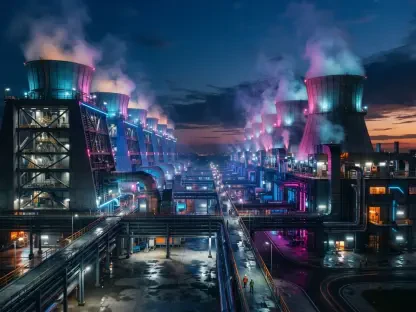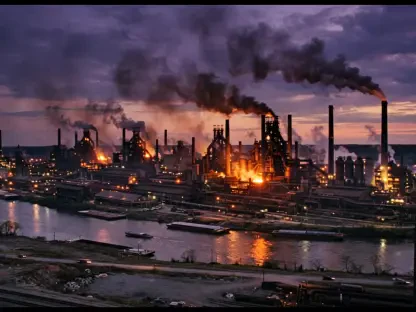

For the first time, automated emission monitoring systems will provide the definitive record for calculating the duration and severity of environmental violations at high-impact industrial sites. This monumental shift arrives with the formal enactment of Law No. 340-VIII, which was signed on July 8, 2026, and is slated for full implementation across the Republic of Kazakhstan on September 8, 2026. This legislation represents a fundamental restructuring of the state’s approach to industrial oversight, moving away from broad administrative protections toward a highly specialized, rigorous environmental control framework. Historically, industrial enterprises operated under the protective umbrella of the Entrepreneurial Code, which was designed to minimize state interference and provide a standardized set of procedures for all government audits. However, the new law recognizes that the ecological risks posed by heavy industry require a more nuanced and aggressive oversight mechanism. By transferring the regulatory jurisdiction of major facilities to the Environmental Code, the Kazakh government is signaling that environmental protection now takes precedence over traditional administrative leniency for business entities.
The Regulatory Pivot: From Business Shielding to Ecological Accountability
The core of this legislative overhaul lies in the new jurisdictional boundaries established for different classes of industrial operators. Under Law No. 340-VIII, a clear distinction is made between facilities based on their potential to cause environmental harm, effectively creating a tiered system of scrutiny. Operators of Category I and II facilities—those identified as having significant or moderate negative impacts on the environment—will no longer enjoy the general protections afforded by the Entrepreneurial Code during inspections. Instead, these entities are now directly governed by the specialized and more stringent provisions of the Environmental Code. This shift reflects an “environmental-first” philosophy, where the state assumes a more assertive role in monitoring the most substantial polluters. By removing these high-impact facilities from the standard administrative framework, the government ensures that inspectors have the legal tools necessary to perform deep dives into complex industrial processes without the procedural constraints that previously favored business continuity over ecological safety.
In contrast, the regulatory burden remains relatively stable for smaller enterprises categorized under Levels III and IV, which represent facilities with minimal or negligible environmental footprints. These operators continue to fall under the jurisdiction of the Entrepreneurial Code, maintaining a level of protection against excessive state oversight. However, even these smaller players are not entirely exempt from the modernization of the reform, as the state has introduced specific limitations on the types of monitoring they face, such as on-site preventive monitoring and restricted grounds for unscheduled inspections. This strategic division of labor allows the Kazakh environmental authorities to concentrate their most intensive resources and specialized personnel on the largest industrial sites. By focusing on the sectors that contribute most significantly to the national carbon footprint and pollution levels, the state aims to achieve more meaningful environmental outcomes while simultaneously reducing unnecessary bureaucratic pressure on the small-business sector.
Digital Surveillance: The Transition to Remote Monitoring Systems
One of the most transformative elements of the new legislation is the formalization of remote monitoring as a primary instrument of state environmental control. Replacing the previous, less structured system of “preventive monitoring without on-site visits,” the law codifies a technologically advanced framework that allows the state to maintain constant vigilance over industrial operations. This is far more than a simple change in terminology; it introduces a rigid, three-tier classification system for violations detected through digital data streams. Minor violations now result in a straightforward official order to rectify the issue within a specified timeframe. This allows for a cooperative approach to compliance, giving companies the opportunity to correct technical errors or minor deviations before they escalate into more serious legal or environmental problems. This data-driven transparency is intended to foster a culture of self-regulation among industrial operators who are now aware that their performance is being watched in near real-time.
The stakes increase significantly when the state’s remote monitoring systems identify what are now classified as significant or gross violations. Significant violations trigger a mandatory corrective order, but the law now specifies that a failure to comply with this order serves as a direct legal trigger for an unscheduled on-site inspection. Even more critically, the detection of a gross violation through remote data provides the government with the immediate authority to launch an on-site audit without the prior bureaucratic hurdles that once delayed state responses. This streamlined process removes the “buffer time” that companies previously exploited to mask operational failures. By leveraging advanced sensors and data analytics, the state can now classify non-compliance with unprecedented speed and precision, ensuring that serious environmental threats are addressed before they can cause irreversible damage to the surrounding ecosystem or public health.
Real-Time Oversight: The Integration of Automated Monitoring
The role of technology is further solidified through the mandatory integration of Automated Monitoring Systems (AMS) for Category I facilities. These systems are designed to transmit emission data directly to government databases, creating a continuous and tamper-proof record of an enterprise’s environmental footprint. This shift significantly reduces the state’s historical reliance on manual self-reporting and periodic physical inspections, which were often prone to human error or data manipulation. By establishing a direct digital link between the factory floor and the regulator, Law No. 340-VIII creates a level of transparency that was previously unattainable. For industrial operators, this means that every cubic meter of air emission or liter of wastewater discharge is accounted for and analyzed against the limits set in their environmental permits. This real-time data integration ensures that the state can maintain a proactive stance, moving away from a reactive model of environmental enforcement.
Beyond the continuous data flow provided by the AMS, the law significantly expands the scope of what constitutes a “comprehensive inspection.” Previously, these audits were often administrative exercises focused on checking whether a company possessed the correct permits or met basic qualification requirements for its specific industry. Under the new regime, the government is empowered to evaluate a facility’s adherence to the entirety of environmental legislation during a single comprehensive audit. This means that inspectors can now examine everything from complex waste management protocols and water recycling efficiency to the nuanced air quality standards that govern heavy industrial zones. This holistic approach prevents companies from hiding specific operational failures behind a facade of general compliance. It forces industrial managers to view environmental stewardship as an integrated part of their entire production cycle rather than a set of isolated regulatory boxes to be checked periodically.
Emergency Enforcement: Broadened Grounds for Unscheduled Inspections
The expansion of the grounds for unscheduled inspections represents a significant shift in the power dynamic between the state and the industrial sector. Under Law No. 340-VIII, the government has identified several new scenarios that mandate immediate state intervention, bypassing the traditional scheduled audit cycles. These triggers include not only data discrepancies found through remote monitoring but also a broad range of emergency situations. The law grants a clear mandate for inspectors to enter a facility following accidents, fires, catastrophes, or hazardous natural phenomena. This ensures that the state can quickly assess the environmental impact of industrial disasters and hold companies accountable for their response and mitigation efforts. By formalizing these triggers, the legislation eliminates the procedural delays that often hindered the state’s ability to gather evidence and protect public safety in the immediate aftermath of a crisis.
Interestingly, the legislation also identifies “adverse meteorological conditions” as a valid legal ground for initiating an unscheduled inspection if such conditions are deemed to impact human health or the environment. This inclusion highlights the state’s recognition of the complex interplay between industrial emissions and local weather patterns, such as temperature inversions that can trap pollutants in urban areas. This provision allows the state to investigate industrial operations during periods of poor air quality to ensure that facilities are taking necessary steps to reduce their output as required by environmental law. By broadening the mandate to include incidents that disrupt “people’s livelihoods” or cause environmental harm regardless of direct negligence, the government has effectively removed the traditional “wait-and-see” approach. This proactive enforcement model is designed to provide the state with maximum flexibility in responding to environmental threats as they emerge.
Legal Recourse Redefined: Navigating the New Appeal Procedures
The migration of high-impact facilities to the jurisdiction of the Environmental Code has profound implications for the legal rights of industrial operators, particularly regarding their ability to challenge state actions. In the previous regulatory environment, businesses often had the right to bypass administrative appeals within the regulatory agency and take their grievances directly to the court system. However, the introduction of Article 179 in the Environmental Code changes this dynamic by implying a mandatory pre-trial appeal procedure. This means that companies must now seek a resolution within the environmental ministry or relevant regional agency before they are permitted to seek judicial review. This change is intended to reduce the burden on the court system and allow technical experts within the government to resolve disputes over complex environmental data and inspection findings before they reach a judge.
Furthermore, the law introduces a “no-suspension” rule that fundamentally changes the tactical landscape of environmental litigation. In the past, companies could often delay or halt an inspection by filing a legal appeal against the audit order, using the court process to buy time. Under the new rules, the act of appealing an inspection or its extension does not stop the oversight process; the audit will proceed as scheduled even if the operator is simultaneously contesting its legality in court. This measure is a direct response to historical instances where litigation was used as a tool to obstruct state oversight and prevent the timely collection of evidence. By ensuring that inspections continue regardless of legal challenges, the state maintains the integrity of its monitoring efforts and ensures that potential environmental violations are documented and addressed without procedural interruptions that could compromise the safety of the public.
Strategic Implications: Establishing Clear Parameters for Future Compliance
The standardization of the methodology for calculating the duration of emission violations was a cornerstone of the reforms that sought to resolve long-standing disputes between the state and industry. For many years, the “gray area” regarding how long a facility had been in excess of its permitted limits led to protracted legal battles and inconsistent fine assessments. The law clarified this by establishing that for Category I and II facilities, the period of excess emissions was to be calculated from the date of the last submitted production environmental control report. This established a clear, documented baseline that emphasized the importance of accurate and frequent reporting. For those facilities equipped with an AMS, the data generated by the automated systems became the final, indisputable record for determining the severity of a violation. This transition to objective, data-backed metrics removed much of the subjective interpretation that previously plagued environmental enforcement actions.
Ultimately, the implementation of Law No. 340-VIII forced industrial operators to recognize that environmental compliance was no longer a periodic administrative hurdle but a continuous, real-time obligation. Organizations that moved quickly to upgrade their monitoring technologies and internal audit protocols found themselves better positioned to navigate the new regulatory landscape. The transition toward the Environmental Code signaled a broader national commitment to aligning Kazakh environmental standards with international best practices, prioritizing long-term ecological sustainability over short-term industrial convenience. Industry leaders realized that the “environmental-first” philosophy required a shift in corporate culture, where transparency and digital integration were the only viable paths to maintaining a social and legal license to operate. The state, in turn, established a more efficient and data-driven oversight mechanism that ensured industrial growth would not come at the expense of the nation’s environmental health.